Testosterone Replacement Therapy Cheongdam Seoul Clinic
TRT and Men’s Hormone Wellness Care in Korea
Testosterone replacement therapy in Cheongdam, Seoul is a medical treatment for appropriately diagnosed male hypogonadism, which requires compatible symptoms together with consistently low testosterone levels confirmed through proper blood testing. Patients considering TRT in Korea should receive individualized evaluation of the cause of low testosterone, fertility plans, blood count, prostate health, cardiovascular and sleep-related risks, treatment formulation, expected benefits, and ongoing laboratory monitoring.
Testosterone Replacement Therapy in Cheongdam, Seoul
Testosterone replacement therapy, commonly abbreviated TRT, is used to restore testosterone levels in men with appropriately diagnosed testosterone deficiency or hypogonadism.
Testosterone plays important roles in:
- Sexual desire
- Erectile and sexual function
- Sperm production
- Muscle mass
- Bone health
- Red blood cell production
- Development and maintenance of male secondary sexual characteristics
TRT should be prescribed after medical evaluation rather than solely because a patient feels tired, wants more muscle, or has obtained one isolated low testosterone result.
What Is Low Testosterone?
Low testosterone refers to testosterone concentrations below an appropriate laboratory reference range when measured under suitable conditions.
However, a low laboratory value alone does not establish clinical hypogonadism.
Major endocrine guidelines recommend diagnosing hypogonadism when a patient has:
- Symptoms or signs consistent with testosterone deficiency
- Unequivocally low testosterone concentrations
- Consistently low results on repeat testing
Testosterone levels vary during the day and can also fall temporarily because of illness, poor nutrition, excessive exercise, obesity, medications, or sleep-related factors.
What Is Male Hypogonadism?
Male hypogonadism occurs when the body does not produce adequate testosterone because of a disorder affecting the testicles, pituitary gland, hypothalamus, or related hormonal pathways.
It may be classified as:
Primary Hypogonadism
The testicles themselves do not produce adequate testosterone.
Secondary Hypogonadism
The pituitary gland or hypothalamus does not provide appropriate hormonal stimulation to the testicles.
Distinguishing these patterns can help identify the underlying cause and guide treatment.
What Are the Symptoms of Low Testosterone?
Possible symptoms can include:
- Reduced sexual desire
- Reduced spontaneous or morning erections
- Erectile difficulties in some patients
- Reduced energy
- Reduced muscle mass
- Reduced physical strength
- Increased body fat
- Low mood
- Difficulty concentrating
- Reduced bone density
- Unexplained anemia
- Reduced body or facial hair in selected cases
- Fertility problems
These symptoms are not specific to testosterone deficiency.
Sleep deprivation, depression, chronic illness, obesity, medications, thyroid disease, relationship stress, and other conditions can produce similar complaints.
Does Fatigue Mean I Have Low Testosterone?
Not necessarily.
Fatigue is extremely nonspecific.
Potential causes include:
- Poor sleep
- Sleep apnea
- Depression
- Anxiety
- Anemia
- Thyroid disease
- Diabetes
- Chronic illness
- Medication effects
- Excessive exercise
- Poor nutrition
- Stress
Testosterone testing may be appropriate when fatigue occurs alongside other suggestive symptoms, but fatigue alone is insufficient to diagnose hypogonadism.
The human endocrine system has unfortunately resisted becoming a convenient explanation for every bad Tuesday.
Does Low Libido Mean Low Testosterone?
Low testosterone can reduce sexual desire.
However, libido is also influenced by:
- Psychological health
- Relationship factors
- Stress
- Sleep
- Medications
- Depression
- Other hormones
- Chronic illness
Testosterone evaluation may be appropriate when persistent low libido is accompanied by other symptoms.
Can Low Testosterone Cause Erectile Dysfunction?
Low testosterone can contribute to erectile dysfunction in selected patients.
However, ED is frequently caused by vascular, neurological, medication-related, psychological, or metabolic factors.
Many men with erectile dysfunction have normal testosterone levels.
TRT should therefore not be treated as a universal erectile dysfunction therapy.
How Is Low Testosterone Diagnosed?
Diagnosis usually involves:
- Medical history
- Review of symptoms
- Sexual and reproductive history
- Medication review
- Physical examination
- Testosterone blood testing
- Additional hormonal testing when indicated
Endocrine Society guidance recommends confirming low testosterone with repeat early-morning fasting total testosterone testing.
Why Is Testosterone Tested in the Morning?
Testosterone has a daily rhythm and is generally higher earlier in the day.
This is particularly relevant in younger men.
Morning testing provides a more standardized basis for diagnosis.
The Endocrine Society patient guidance recommends at least two early-morning tests when evaluating suspected hypogonadism.
How Many Testosterone Tests Do I Need?
One low testosterone result should generally be confirmed.
The Endocrine Society's 2026 statement emphasizes diagnosis based on symptoms plus at least two early-morning fasting testosterone measurements using reliable laboratory methods.
Additional testing may be needed when results are borderline or when abnormalities in sex-hormone-binding globulin affect interpretation.
What Is Total Testosterone?
Total testosterone measures testosterone circulating in the blood in both bound and unbound forms.
It is commonly used as the initial laboratory test for suspected testosterone deficiency.
Interpretation should consider the laboratory method and reference range.
What Is Free Testosterone?
Free testosterone represents the small fraction of circulating testosterone that is not bound to proteins.
It may provide additional information in selected patients, particularly when total testosterone and symptoms do not align or when sex-hormone-binding globulin is abnormal.
Free testosterone testing should use an appropriate assay or validated calculation method.
What Testosterone Level Is Considered Low?
No single laboratory cutoff should be interpreted without clinical context.
The AUA diagnostic framework commonly uses a total testosterone threshold around 300 ng/dL as a reasonable supporting cutoff, combined with symptoms and repeat testing.
Laboratory reference ranges and testing methods vary.
A result of 299 does not transform one patient into a fundamentally different organism from someone measuring 301.
What Additional Hormone Tests May Be Needed?
When testosterone deficiency is confirmed, additional tests may help determine the cause.
These can include:
- LH
- FSH
- Prolactin
- SHBG in selected cases
- Thyroid testing when indicated
- Additional pituitary hormones
Endocrine Society guidance recommends measuring LH and FSH to distinguish primary from secondary hypogonadism.
What Is LH?
Luteinizing hormone, or LH, is produced by the pituitary gland.
It signals the testicles to produce testosterone.
High LH with low testosterone may suggest primary testicular dysfunction.
Low or inappropriately normal LH with low testosterone may suggest a pituitary or hypothalamic cause.
What Is FSH?
Follicle-stimulating hormone, or FSH, helps regulate sperm production.
Abnormal FSH can provide information about testicular and reproductive function.
Elevated FSH may suggest impaired sperm production in selected patients.
Why Is Prolactin Tested?
Elevated prolactin can interfere with reproductive hormone signaling and contribute to low testosterone.
If low testosterone occurs with low or normal LH, prolactin testing may be appropriate.
Persistent significant prolactin elevation may require further endocrine or pituitary evaluation.
Do I Need a Pituitary MRI?
Most patients with low testosterone do not automatically need MRI.
Pituitary imaging may be considered when:
- Significant secondary hypogonadism is suspected
- Prolactin is persistently elevated
- Other pituitary hormone abnormalities are present
- Headaches or visual symptoms suggest pituitary disease
- Testosterone is severely low with an unexplained central pattern
Testing should follow clinical findings.
What Causes Low Testosterone?
Possible causes include:
- Testicular disorders
- Pituitary disease
- Hypothalamic disorders
- Obesity
- Type 2 diabetes
- Certain genetic conditions
- Testicular injury
- Chemotherapy or radiation
- Opioid use
- Corticosteroid use
- Chronic systemic illness
- Sleep disorders
- Anabolic steroid use or withdrawal
- Some other medications
Identifying a reversible cause can change the treatment strategy.
Obesity and Low Testosterone
Obesity is frequently associated with lower testosterone concentrations.
Weight loss can improve testosterone levels in some men.
The Endocrine Society's July 2026 statement specifically says that for appropriately diagnosed hypogonadism associated with overweight or obesity and no other identified cause, weight loss is typically the first-line treatment.
This matters because injecting testosterone before evaluating a reversible metabolic contributor may create years of treatment around a problem that could partly improve through another route.
Diabetes and Low Testosterone
Men with type 2 diabetes have a higher prevalence of low testosterone.
However, testosterone therapy should not be prescribed simply to improve blood glucose control.
Endocrine Society guidance specifically recommends against using TRT as a treatment for glycemic control in men with type 2 diabetes.
Diabetes and hypogonadism should each receive appropriate treatment.
Opioids and Low Testosterone
Long-term opioid medication can suppress hypothalamic and pituitary hormone signaling and contribute to low testosterone.
Patients should provide a complete medication history.
Stopping opioids abruptly can be dangerous, so medication changes require supervision from the prescribing healthcare professional.
Anabolic Steroids and Low Testosterone
Anabolic steroid use can suppress the body's natural testosterone production.
After stopping anabolic steroids, some men develop prolonged low testosterone and reduced sperm production.
Management depends on:
- Type of steroid
- Duration of use
- Current hormone levels
- Fertility goals
- Symptoms
Simply beginning lifelong TRT without understanding prior anabolic steroid use can complicate recovery of natural hormonal function.
What Is TRT?
TRT replaces testosterone using a pharmaceutical testosterone formulation.
The goal is generally to raise testosterone into an appropriate physiological range and improve symptoms attributable to testosterone deficiency.
Treatment methods can include:
- Testosterone injections
- Testosterone gels
- Transdermal preparations
- Other approved formulations depending on country and availability
The appropriate method depends on diagnosis, patient preference, cost, dosing pattern, side effects, and treatment availability.
Testosterone Injections
Injectable testosterone is one common form of TRT.
Depending on the formulation, injections may be given at different intervals.
Potential advantages include predictable dosing and avoidance of daily topical application.
Potential drawbacks can include:
- Injection discomfort
- Fluctuation in hormone concentrations with certain formulations
- Increased hematocrit
- Need for repeat treatment
Exact formulations available in Korea should be confirmed with the treating clinic.
Testosterone Gel
Topical testosterone gel is applied to the skin and absorbed gradually.
Potential advantages include daily dosing and relatively steady exposure.
Patients must follow instructions carefully because testosterone can potentially transfer through skin contact to another person.
Hands and application sites should be managed according to product instructions.
Testosterone Patch
Transdermal patches deliver testosterone through the skin.
Skin irritation can occur.
Availability varies by market.
Patients should use only approved prescription formulations under medical supervision.
Long-Acting Testosterone
Long-acting injectable formulations can reduce dosing frequency.
However, dosing intervals, adverse effects, and monitoring requirements vary according to the exact medication.
A patient should know which testosterone ester or formulation is being used rather than referring to everything simply as a “hormone shot.”
What Benefits Can TRT Provide?
In appropriately diagnosed hypogonadism, testosterone therapy may improve selected outcomes involving:
- Sexual desire
- Sexual function
- Anemia
- Bone density
- Lean body mass
- Secondary sexual characteristics
Individual response varies.
Treatment should target symptoms plausibly linked to testosterone deficiency rather than being marketed as a universal anti-aging intervention.
Does TRT Improve Energy?
Some hypogonadal patients report improvement in energy or well-being.
However, fatigue can have many other causes.
A patient whose testosterone normalizes but fatigue remains should be evaluated for other conditions rather than escalating testosterone indefinitely.
Does TRT Increase Muscle?
Testosterone can increase lean body mass in hypogonadal men.
However, TRT is not intended to function as bodybuilding steroid therapy.
The medical goal is physiological replacement in appropriately diagnosed patients.
Supraphysiologic testosterone dosing carries additional risks and should not be rebranded as “optimized TRT” simply because the typography on the clinic website looks expensive.
Does TRT Reduce Body Fat?
Testosterone therapy can influence body composition in hypogonadal men and may reduce fat mass in some patients.
It is not a weight-loss medication.
Obesity treatment should address nutrition, physical activity, sleep, metabolic disease, and appropriate medical weight-management options.
Does TRT Improve Libido?
TRT can improve sexual desire in selected men with confirmed testosterone deficiency.
Response varies.
Persistent low libido after testosterone normalization may indicate other psychological, relationship, medication, endocrine, or medical contributors.
Does TRT Improve Erectile Dysfunction?
TRT may improve erectile symptoms in selected men with true testosterone deficiency.
However, vascular ED frequently requires separate treatment such as PDE5 inhibitors.
Men with normal testosterone should not expect TRT to serve as a stronger version of sildenafil.
Does TRT Improve Mood?
Low testosterone can be associated with low mood in some men.
Testosterone treatment may improve selected symptoms in appropriately diagnosed hypogonadism.
It is not a replacement for appropriate treatment of major depression, anxiety, or other mental-health conditions.
Is TRT an Anti-Aging Treatment?
TRT should not be automatically prescribed for normal aging.
Testosterone concentrations can decline with age, but symptoms and persistently low measurements are required for diagnosis.
The Endocrine Society specifically recommends against routinely prescribing testosterone to all men aged 65 or older solely because testosterone is low.
Can Healthy Men Take TRT for Wellness?
Medical TRT is intended for diagnosed testosterone deficiency.
Using testosterone solely for general vitality, athletic performance, cosmetic muscle gain, or an abstract goal of “optimization” falls outside ordinary replacement treatment.
Patients should understand the difference between replacing a deficiency and raising hormone levels beyond normal physiology.
TRT and Fertility
This is one of the most important considerations before starting testosterone.
External testosterone suppresses signals from the pituitary gland to the testicles.
As a result, sperm production can fall substantially or stop.
The AUA/ASRM male infertility guideline states that clinicians should not prescribe exogenous testosterone to men interested in current or future fertility.
Does TRT Lower Sperm Count?
Yes.
Exogenous testosterone can suppress LH and FSH and reduce intratesticular testosterone concentrations required for normal sperm production.
This can cause:
- Reduced sperm concentration
- Severe oligospermia
- Azoospermia
Recovery after stopping testosterone can take months and, in some cases, considerably longer.
Can TRT Cause Infertility?
TRT can produce temporary or prolonged suppression of sperm production.
Patients planning biological children should discuss fertility before starting therapy.
Alternative strategies may be considered depending on the cause of low testosterone and reproductive goals.
The fertility conversation belongs before the first injection, rather than after a semen analysis unexpectedly contains the biological equivalent of an empty parking lot.
Can Fertility Return After Stopping TRT?
Sperm production recovers in many men after exogenous testosterone is discontinued.
Recovery timing varies considerably.
The AUA/ASRM guideline notes that recovery can take months and occasionally years.
A reproductive specialist may be appropriate when fertility is a priority.
What Alternatives Exist for Men Who Want Fertility?
Depending on the cause of testosterone deficiency and fertility goals, specialists may consider treatments intended to stimulate endogenous hormone production rather than directly replace testosterone.
These may include selected use of:
- hCG
- SERMs such as clomiphene in certain circumstances
- Other fertility-directed hormonal approaches
Indications and regulatory status differ.
These treatments require specialist assessment rather than improvisation from gym-forum pharmacology.
TRT and Hematocrit
Testosterone can increase red blood cell production.
This can raise hematocrit.
Excessively elevated hematocrit increases blood viscosity and may require dose adjustment, temporary treatment interruption, or additional evaluation.
The AUA recommends measuring hemoglobin and hematocrit before starting testosterone and counselling patients about the risk of polycythemia.
What Is Polycythemia During TRT?
Polycythemia refers to an abnormally high concentration of red blood cells.
Possible symptoms can include:
- Headache
- Dizziness
- Flushing
- Fatigue
Many patients have no obvious symptoms.
This is why laboratory monitoring matters.
A treatment that feels fine can still be producing an unfavorable blood-count change.
What Tests Are Needed Before TRT?
Depending on age and medical history, baseline evaluation may include:
- Repeat testosterone testing
- LH
- FSH
- Prolactin when indicated
- Hemoglobin and hematocrit
- PSA when appropriate
- Prostate assessment
- Fertility discussion
- Metabolic evaluation
- Screening for relevant contraindications
Testing should be individualized.
TRT and PSA
Prostate health should be considered before and during testosterone therapy in appropriate age groups.
PSA testing may be included based on age, individual risk, and clinical circumstances.
An abnormal PSA requires appropriate evaluation rather than simply being ignored because testosterone treatment has already been purchased as a package.
Does TRT Cause Prostate Cancer?
Current evidence has not established that appropriately prescribed TRT directly causes prostate cancer.
However, long-term safety evidence remains incomplete.
The Endocrine Society's 2026 statement emphasizes that long-term prostate-cancer safety remains unestablished and that appropriate prostate risk assessment and monitoring remain important.
Can Men With Prostate Cancer Take TRT?
Testosterone therapy requires specialist consideration in patients with known or suspected prostate cancer.
The Endocrine Society guideline recommends against initiating testosterone therapy in men with active breast or prostate cancer and specifies circumstances involving abnormal prostate findings or PSA that require further evaluation before treatment.
TRT and Enlarged Prostate
Testosterone can influence prostate tissue.
Patients with severe lower urinary tract symptoms or significant prostate-related obstruction require careful assessment before TRT.
The Endocrine Society lists severe lower urinary tract symptoms among conditions in which starting testosterone is discouraged.
TRT and Sleep Apnea
Untreated severe obstructive sleep apnea is an important consideration before TRT.
The Endocrine Society recommends against starting therapy in men with untreated severe OSA.
Patients who snore heavily, stop breathing during sleep, or experience severe daytime sleepiness may require sleep evaluation.
TRT and Cardiovascular Health
Cardiovascular safety has been studied extensively.
The large TRAVERSE program did not show a meaningful increase in heart attack or stroke over its follow-up period, according to the Endocrine Society's 2026 review.
However, the Society notes remaining safety questions, including increased pulmonary embolism and fracture findings in the trial and limited long-term data.
Cardiovascular history should therefore remain part of treatment assessment.
Can I Start TRT After a Heart Attack or Stroke?
Recent serious cardiovascular events require careful consideration.
The Endocrine Society guideline recommends against initiating testosterone in patients who have had a myocardial infarction or stroke within the previous six months.
Individual cardiovascular assessment remains important beyond that period.
TRT and Blood Clots
Testosterone therapy can increase hematocrit, and thrombotic risk remains an area of clinical concern.
The 2026 Endocrine Society statement notes that recent trial data found an increased incidence of pulmonary embolism in testosterone-treated participants.
Patients with previous thrombosis or thrombophilia require individualized risk assessment.
What Are the Possible Side Effects of TRT?
Potential side effects can include:
- Acne
- Oily skin
- Increased hematocrit
- Reduced sperm production
- Testicular shrinkage
- Fluid retention
- Breast tenderness in selected patients
- Changes in prostate-related symptoms
- Formulation-specific injection or skin reactions
Potential risks and monitoring depend on the treatment method and patient.
Does TRT Shrink the Testicles?
Exogenous testosterone suppresses pituitary signaling to the testicles.
This can reduce intratesticular activity and may lead to decreased testicular volume in some patients.
The same mechanism contributes to reduced sperm production.
Can TRT Cause Acne?
Yes.
Androgen activity can increase sebaceous gland activity and contribute to acne or oily skin.
The severity varies according to dose, hormone concentration, baseline skin tendency, and individual response.
Can TRT Cause Hair Loss?
Androgen-sensitive hair loss is influenced by genetics and DHT activity.
TRT may accelerate male-pattern hair loss in genetically predisposed men.
It does not cause identical hair loss in every patient.
Can TRT Cause Gynecomastia?
Breast tenderness or enlargement can occur in some men receiving testosterone.
Multiple hormonal mechanisms can contribute.
Persistent breast enlargement or a new breast mass should be evaluated medically.
What Monitoring Is Needed During TRT?
Monitoring typically includes clinical response and laboratory testing.
Depending on patient age, formulation, and medical history, clinicians may monitor:
- Testosterone concentration
- Hemoglobin
- Hematocrit
- PSA and prostate health when appropriate
- Symptoms
- Treatment side effects
- Cardiovascular or sleep-related concerns
Treatment should be adjusted when hormone levels, symptoms, or adverse effects indicate a problem.
How Often Is Testosterone Checked During TRT?
Monitoring intervals depend on the formulation and treatment stage.
Testing is generally performed after starting therapy to confirm that testosterone reaches an appropriate range and symptoms are being assessed.
Subsequent monitoring continues periodically.
Exact timing should follow the prescribing protocol.
What Testosterone Level Should TRT Aim For?
The goal is generally an appropriate physiological testosterone concentration with symptom improvement.
TRT is not intended to push levels as high as technically possible.
Persistently supraphysiologic testosterone may increase adverse effects without providing appropriate replacement benefit.
Hormones, inconveniently, do not award bonus points for exceeding the reference range.
What If TRT Does Not Improve My Symptoms?
If testosterone has normalized and symptoms do not improve, the treatment strategy should be reassessed.
Fatigue, ED, low mood, low libido, and poor concentration can have causes unrelated to testosterone.
Continuing to increase testosterone indefinitely may expose the patient to risk without treating the actual problem.
How Long Does TRT Take to Work?
Different effects develop at different rates.
Some sexual symptoms may improve over weeks or months.
Changes in body composition or bone-related outcomes take longer.
Response depends on baseline deficiency, treatment method, adherence, medical conditions, and whether the original symptoms were actually caused by testosterone deficiency.
Is TRT Lifelong?
Sometimes.
Men with permanent testicular or pituitary causes may require long-term replacement.
Patients with reversible contributors may not necessarily require lifelong therapy.
The underlying cause should therefore be identified before someone assumes one low blood test has created a permanent subscription service.
Can I Stop TRT?
Testosterone therapy can be stopped under medical supervision.
After discontinuation, endogenous testosterone production may take time to recover, particularly after prolonged therapy.
Symptoms may return if the original cause of hypogonadism remains.
Fertility recovery and hormonal recovery vary.
TRT vs. Testosterone Boosters
Prescription TRT contains pharmaceutical testosterone.
Over-the-counter products marketed as “testosterone boosters” contain various supplements and are not equivalent to hormone replacement.
Evidence, ingredients, purity, and safety vary substantially.
Patients with suspected hypogonadism need diagnostic testing rather than supplement marketing.
TRT vs. Anabolic Steroids
Medical TRT aims to restore deficient testosterone to a physiological range.
Anabolic steroid use for bodybuilding commonly involves supraphysiologic doses or multiple androgenic compounds.
The latter carries substantially different risks and should not be described as routine hormone replacement.
TRT vs. Clomiphene
Clomiphene is a selective estrogen receptor modulator that can stimulate endogenous reproductive hormone signaling in some men.
It is sometimes used off-label in male hypogonadism, particularly when preservation of fertility is relevant.
It is not interchangeable with testosterone and requires appropriate specialist assessment.
TRT vs. hCG
Human chorionic gonadotropin can stimulate LH-like signaling in the testicles.
It may have a role in selected hypogonadal or fertility-related situations.
TRT directly supplies testosterone, while hCG attempts to stimulate testicular production.
Selection depends on the underlying hormonal pattern and reproductive goals.
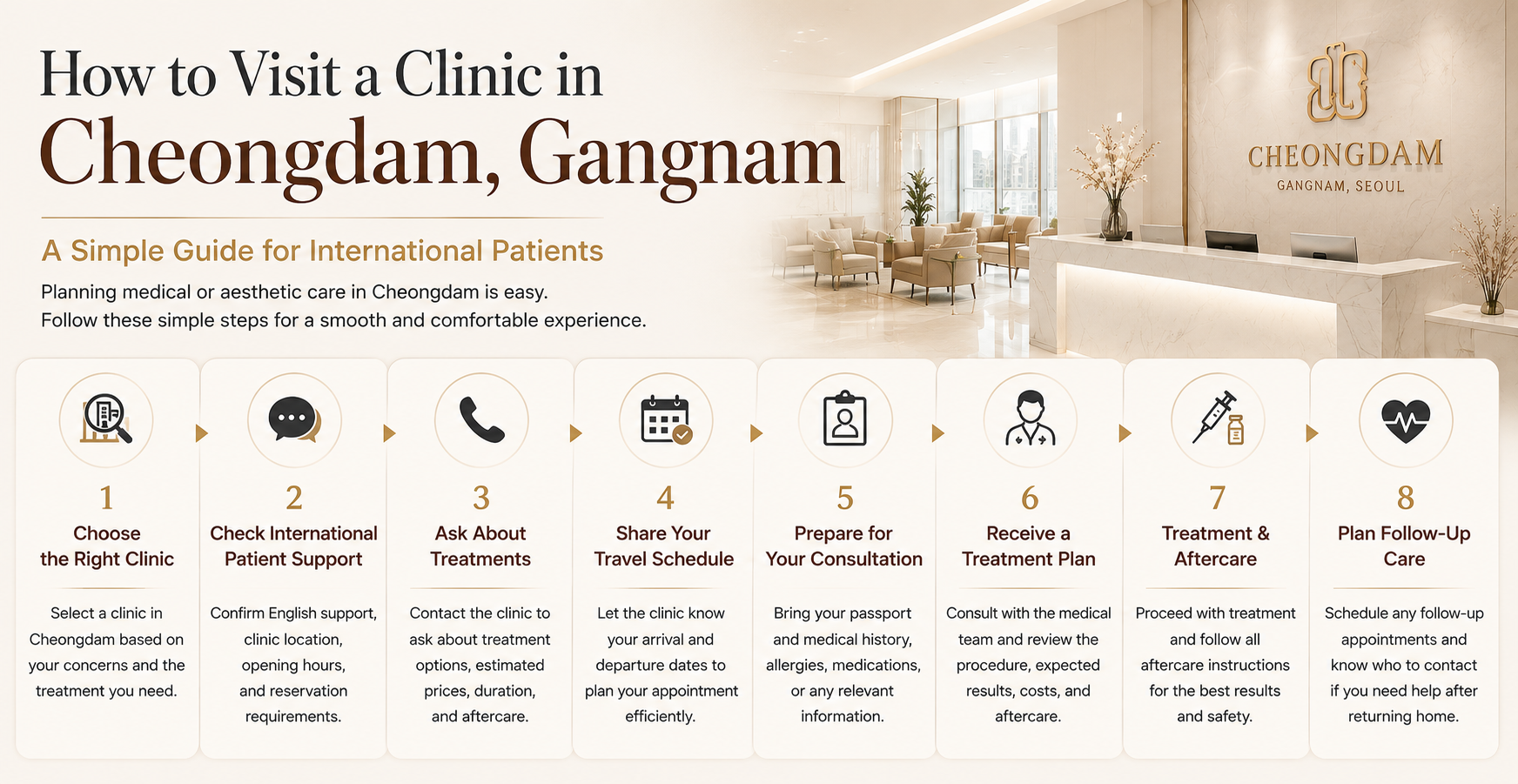
TRT for Foreigners in Seoul, Korea
International residents, expatriates, students, business travelers, and visitors may seek testosterone evaluation while living in or visiting Seoul.
Foreign patients considering TRT in Cheongdam or Gangnam may wish to ask:
- Is English-language consultation available?
- Are two morning testosterone tests required?
- Are LH and FSH testing available?
- Is prolactin testing available when indicated?
- Is hematocrit monitored?
- Is PSA assessment available when appropriate?
- Which testosterone formulations are offered?
- How often is follow-up required?
- How does TRT affect fertility?
- Can treatment continue if I leave Korea?
- How are prescriptions and laboratory monitoring coordinated internationally?
Patients already receiving TRT should bring previous laboratory results, medication names, dose schedules, and treatment history.
Choosing a TRT Clinic in Cheongdam
Patients should look for diagnosis and monitoring rather than testosterone dispensing alone.
Important considerations include:
- Confirmation with repeat testosterone testing
- Assessment of symptoms
- Evaluation of reversible causes
- LH and FSH testing when appropriate
- Fertility counselling
- Baseline hematocrit
- Prostate assessment when appropriate
- Individualized formulation selection
- Ongoing laboratory monitoring
- Dose adjustment according to clinical response
- Clear discussion of risks
A clinic that can prescribe testosterone in five minutes has demonstrated speed. It has not necessarily demonstrated endocrinology.
Questions to Ask Before Starting TRT
Patients may wish to ask:
- Do my symptoms fit testosterone deficiency?
- Has my testosterone been tested twice in the morning?
- What is causing my low testosterone?
- Should LH, FSH, or prolactin be tested?
- Could weight, sleep, medications, or illness be contributing?
- Will TRT reduce my sperm count?
- Should I preserve fertility first?
- Which testosterone formulation is appropriate?
- What side effects should I expect?
- How will hematocrit be monitored?
- Do I need PSA or prostate monitoring?
- What happens if my symptoms do not improve?
- How often will follow-up testing occur?
Frequently Asked Questions
What is testosterone replacement therapy?
TRT is medical treatment that replaces testosterone in appropriately diagnosed men with symptomatic testosterone deficiency or hypogonadism.
How is low testosterone diagnosed?
Diagnosis generally requires symptoms consistent with testosterone deficiency together with repeatedly low testosterone measurements obtained under appropriate conditions.
Do I need two testosterone blood tests?
Major endocrine guidance recommends confirming low testosterone with repeat early-morning testing before diagnosing hypogonadism.
What testosterone level is considered low?
AUA guidance commonly uses total testosterone below approximately 300 ng/dL as a supporting diagnostic threshold, together with symptoms and repeat testing.
What symptoms can low testosterone cause?
Possible symptoms include reduced libido, reduced spontaneous erections, fatigue, reduced muscle mass, low bone density, anemia, and selected mood or concentration changes.
Does TRT increase libido?
It can improve sexual desire in men whose low libido is related to confirmed testosterone deficiency.
Does TRT treat erectile dysfunction?
It may help selected hypogonadal men, but many cases of ED have vascular, neurological, medication-related, or psychological causes that require separate treatment.
Does TRT increase muscle mass?
TRT can increase lean body mass in hypogonadal men, but medical replacement is not intended for supraphysiologic bodybuilding.
Is TRT an anti-aging treatment?
TRT is intended for appropriately diagnosed testosterone deficiency rather than routine treatment of normal aging.
Can TRT reduce fertility?
Yes. External testosterone can substantially suppress sperm production.
Should I use TRT if I want children?
Exogenous testosterone is generally avoided in men pursuing current or near-future fertility.
Can sperm production recover after TRT?
Recovery occurs in many men after stopping testosterone, but it may take months and occasionally longer.
Does TRT increase red blood cells?
Yes. Testosterone can raise hematocrit, which is why blood-count monitoring is important.
Does TRT cause prostate cancer?
Current evidence has not established a direct causal relationship with appropriately prescribed TRT, but long-term safety data remain incomplete and prostate monitoring may be appropriate.
Can I take TRT with BPH?
Patients with significant prostate enlargement or severe urinary symptoms require individualized assessment before testosterone therapy.
Can TRT worsen sleep apnea?
Untreated severe obstructive sleep apnea is an important contraindication or precaution when considering TRT.
Is TRT safe for the heart?
Recent large trials have provided reassuring data regarding heart attack and stroke over several years, while other safety signals and longer-term uncertainties remain. Individual cardiovascular assessment is still important.
What tests are needed during TRT?
Monitoring may include testosterone levels, hematocrit, hemoglobin, PSA when appropriate, symptoms, and treatment-specific safety assessments.
Is TRT lifelong?
It may be long term when the cause of hypogonadism is permanent. Reversible causes may allow a different approach.
Can foreigners receive TRT in Korea?
Yes. International residents and visitors can receive testosterone evaluation and treatment at Korean medical institutions. Diagnostic protocols, testosterone formulations, pricing, English-language support, prescriptions, and follow-up monitoring vary by clinic.
Where can I get TRT in Cheongdam, Seoul?
Men with symptoms suggestive of testosterone deficiency can consult qualified urological, endocrine, or men's health professionals in Cheongdam and the surrounding Gangnam area. An individualized evaluation can confirm whether hypogonadism is present, determine its cause, review fertility and safety considerations, and establish an appropriate hormone-treatment.
Testosterone Replacement Therapy Consultation in Cheongdam, Seoul
TRT may improve selected symptoms and health outcomes in men with properly diagnosed hypogonadism, but safe treatment requires accurate diagnosis, identification of the cause, fertility counselling, appropriate dosing, and ongoing laboratory monitoring.
Patients searching for
Testosterone Replacement Therapy Cheongdam,
TRT Seoul,
Low Testosterone Treatment Korea,
Men’s Hormone Clinic Gangnam,
Testosterone Injection Seoul,
Low T Treatment Korea, or
TRT for Foreigners in Seoul can consult a qualified healthcare professional to discuss symptoms, repeat morning hormone testing, fertility goals, treatment formulations, possible risks, monitoring, and individualized men’s hormone care.