Skin Elasticity Cheongdam Seoul Clinic
Skin Elasticity Treatments and Aesthetic Care in Korea
Skin Elasticity treatments in Cheongdam, Seoul provide personalized aesthetic care for international patients seeking firmer, smoother, and more resilient skin in Korea. Treatments may include skin tightening, collagen stimulation, energy-based procedures, skin boosters, and customized care based on individual concerns. International patients can access convenient, patient-focused skin elasticity treatments in Cheongdam, Gangnam, with support designed to make aesthetic visits in Seoul easier and more comfortable.
What Is Skin Elasticity?
Skin elasticity refers to the skin's ability to stretch and return to its original shape. It is closely related to collagen, elastin, hydration, and the overall structure of the skin.
As people age, collagen and elastin production naturally decreases. This can cause the skin to become less firm and resilient, making fine lines, wrinkles, and sagging more noticeable.
Reduced skin elasticity can affect different areas of the face and neck. Common concerns include loose-looking cheeks, less defined jawlines, and wrinkles that remain visible even when the face is relaxed.
Skin Elasticity Treatment in Cheongdam, Seoul
Cheongdam is a popular area for aesthetic and cosmetic medical services in Seoul. Patients searching for skin elasticity treatment in Seoul may find various procedures designed to improve skin firmness and overall skin quality.
Depending on the patient's condition, treatment options may include energy-based procedures, skin boosters, injectable treatments, and collagen-stimulating procedures.
The most suitable approach depends on the degree of elasticity loss, skin condition, treatment area, and individual aesthetic goals.
What Treatments Are Available for Skin Elasticity?
Different treatments may be used to support skin firmness and elasticity.
Common options include:
- Radiofrequency skin tightening
- Ultrasound-based lifting treatments
- Collagen-stimulating injectables
- Skin boosters for hydration and skin quality
- Laser and energy-based treatments
- Microneedling-based procedures
- Combination treatments for skin rejuvenation
Some treatments primarily focus on collagen stimulation, while others may also improve hydration, texture, or facial contour.
A professional consultation can help identify which treatment is appropriate for the patient's specific concerns.
Skin Elasticity and Collagen
Collagen provides structural support for the skin and plays an important role in maintaining firmness.
As natural collagen production decreases with age, the skin may gradually become thinner and less resilient.
Collagen-stimulating treatments may support the skin's natural remodeling process and improve the appearance of firmness over time.
Because collagen regeneration is gradual, results may develop progressively rather than appearing immediately after treatment.
Skin Elasticity and Sagging Skin
Reduced elasticity is one of the factors that can contribute to facial sagging.
Patients may notice changes around the cheeks, lower face, jawline, and neck as the skin becomes less firm.
Non-surgical tightening and collagen-stimulating treatments may be considered for mild to moderate skin laxity.
However, significant excess skin may require a different treatment approach. An evaluation is important to determine whether non-surgical treatment is appropriate.
Skin Elasticity and Fine Lines
Fine lines can become more visible when the skin loses elasticity and collagen.
Lines around the eyes, forehead, and mouth may gradually become noticeable even when the face is at rest.
Treatments that support collagen production, hydration, or skin quality may help improve the appearance of these lines.
If the lines are primarily caused by repeated facial muscle movement, another treatment approach may be more suitable.
Skin Elasticity and Jawline Definition
Changes in skin elasticity can affect the appearance of the lower face and jawline.
When the skin becomes less firm, the jawline may appear softer or less defined.
Skin tightening treatments may help improve the appearance of lax skin around the lower face.
However, facial fat distribution, muscle structure, and bone shape can also affect jawline definition. These factors should be considered when creating a treatment plan.
Skin Elasticity and Skin Quality
Skin elasticity is closely connected with overall skin quality.
Reduced elasticity may occur alongside dryness, uneven texture, fine lines, enlarged-looking pores, and a dull appearance.
For patients with multiple skin concerns, a combination of treatments may sometimes be considered.
The treatment plan can be adjusted according to whether the primary goal is firmness, hydration, texture, or overall rejuvenation.
What Are the Possible Side Effects?
Possible side effects depend on the specific treatment used to improve skin elasticity.
Injectable procedures may cause temporary redness, swelling, bruising, tenderness, or mild discomfort.
Energy-based treatments may cause temporary warmth, redness, swelling, or sensitivity.
Patients should discuss potential risks, expected downtime, and aftercare with a qualified medical professional before treatment.
Who Should Consider Skin Elasticity Treatment?
Skin elasticity treatments may be considered by adults who are experiencing reduced firmness or early signs of skin aging.
Common concerns include:
- Reduced skin firmness
- Mild facial sagging
- Fine lines and wrinkles
- Less defined jawline
- Loose-looking cheeks
- Neck laxity
- Loss of collagen
- Changes in skin texture
The appropriate treatment depends on the patient's skin condition, facial anatomy, and desired outcome.
Skin Elasticity Treatment for Foreigners in Seoul, Korea
International patients may consider skin elasticity treatment in Korea because Seoul offers a wide range of aesthetic procedures for skin tightening and rejuvenation.
Foreign patients can explore treatments based on their concerns, whether they are primarily interested in improving firmness, stimulating collagen, or addressing overall skin quality.
Before treatment, it is useful to confirm the procedure, expected downtime, treatment duration, and availability of English-language consultation.
Patients visiting Seoul for a short stay should also consider recovery time when arranging their treatment schedule.
Skin Elasticity Treatment vs. Skin Tightening
Skin elasticity and skin tightening are closely related but describe different aspects of skin aging.
Skin elasticity refers to the skin's ability to stretch and return to its original shape, while skin tightening generally refers to treatments designed to improve the appearance of loose or lax skin.
Some treatments can address both concerns by stimulating collagen and improving skin firmness.
The appropriate option depends on the patient's individual skin condition and treatment goals.
Skin Elasticity Care in Cheongdam, Seoul
Maintaining skin elasticity involves both professional treatment and daily skin care.
Sun protection, appropriate hydration, skincare, and healthy lifestyle habits can help support overall skin condition.
For patients considering aesthetic treatments, it is important to identify whether reduced elasticity is related primarily to collagen loss, skin laxity, dehydration, or other factors.
When considering skin elasticity treatment in Cheongdam, individualized treatment planning can help address the specific causes of reduced firmness.
Frequently Asked Questions
What causes loss of skin elasticity?
Loss of skin elasticity is commonly associated with natural aging and reduced collagen and elastin production.
Sun exposure, lifestyle factors, and changes in skin condition can also contribute to reduced firmness.
Can skin elasticity be improved?
Certain aesthetic treatments may help improve the appearance of skin firmness and elasticity by supporting collagen production and skin remodeling.
The degree of improvement varies between individuals.
What is the best treatment for skin elasticity?
There is no single treatment that is best for everyone.
Radiofrequency, ultrasound-based treatments, skin boosters, and collagen-stimulating procedures may be considered depending on the patient's condition.
Can foreigners get skin elasticity treatment in Seoul?
Yes. International patients can receive aesthetic treatments in Seoul depending on clinic policies and medical suitability.
It is recommended to check appointment requirements and English-language consultation availability before visiting.
How long does skin elasticity treatment take?
Treatment time varies depending on the procedure, treatment area, and number of areas being treated.
A consultation can provide a more accurate estimate based on the recommended treatment plan.
Is there downtime after skin elasticity treatment?
Downtime depends on the specific procedure.
Some treatments involve minimal recovery, while others may cause temporary redness, swelling, bruising, or sensitivity.
How long do the results last?
The duration of results varies depending on the treatment, individual skin condition, lifestyle, and natural aging process.
Some patients may consider maintenance treatments to support their results over time.
Skin Elasticity Consultation in Cheongdam, Seoul
A consultation is an important step when choosing skin elasticity treatment in Seoul.
During the consultation, skin firmness, elasticity, texture, wrinkles, and the degree of laxity can be assessed.
Based on these factors, an appropriate treatment or combination of treatments can be discussed.
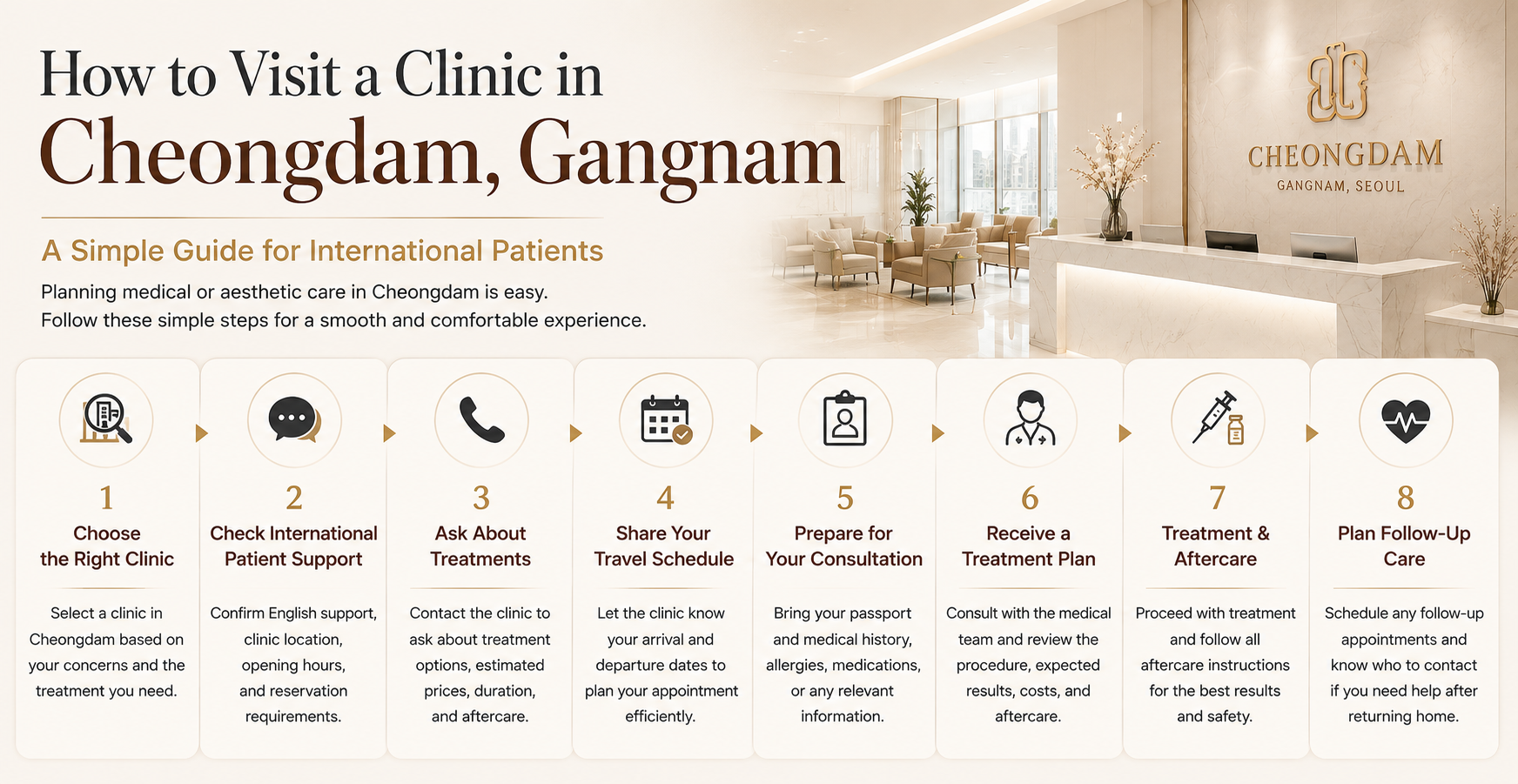
For international patients, it is also helpful to discuss expected downtime, follow-up care, treatment timing, and language support before the procedure.
Whether you are looking for
skin elasticity treatment in Korea, firmer-looking skin, or overall facial rejuvenation, individualized evaluation can help determine the most appropriate treatment approach.