Revision Rhinoplasty Cheongdam Seoul Clinic
Revision Rhinoplasty Surgery and Nasal Care in Korea
Revision Rhinoplasty in Cheongdam, Seoul provides personalized surgical care for international patients seeking to improve the appearance or structure of a previously operated nose in Korea. Treatment may address changes in nasal shape, asymmetry, or structural concerns based on individual anatomy, previous surgery, and goals. International patients can access patient-focused revision rhinoplasty care in Cheongdam, Gangnam, with support designed to make treatment in Seoul easier and more comfortable.
What Is Revision Rhinoplasty?
Revision rhinoplasty is a surgical procedure performed to address concerns that remain or develop after previous nasal surgery.
Patients may consider revision rhinoplasty because of changes in nasal shape, asymmetry, structural problems, breathing difficulties, or dissatisfaction with a previous result.
Revision surgery can be more complex than primary rhinoplasty because previous surgery may have changed the nasal framework, created scar tissue, or reduced the amount of available cartilage.
A detailed examination and review of previous surgical history are important before determining whether revision rhinoplasty is appropriate.
Revision Rhinoplasty in Cheongdam, Seoul
Cheongdam is a popular area in Seoul for plastic surgery and nasal procedures.
Patients considering revision rhinoplasty in Cheongdam may consult with a plastic surgeon to evaluate the current nasal structure, previous surgical changes, scar tissue, skin condition, and functional concerns.
During consultation, the surgeon may also review previous operative records or photographs when available before developing an individualized surgical plan.
What Can Revision Rhinoplasty Address?
Revision rhinoplasty may address concerns such as:
- Nasal asymmetry
- Irregular nasal bridge
- Changes in nasal tip shape
- Over- or under-projection of the tip
- Structural weakness
- Implant-related concerns
- Nasal contour irregularities
- Changes following previous rhinoplasty
- Certain breathing difficulties
- Dissatisfaction with a previous surgical result
The specific concerns that can be addressed depend on the patient's current anatomy and the changes caused by previous surgery.
Not every problem can be completely corrected with revision surgery.
Revision Rhinoplasty Techniques in Cheongdam
Revision rhinoplasty requires individualized surgical planning because the nasal framework has already been altered.
Structural Rhinoplasty
Structural techniques may involve rebuilding or reinforcing parts of the nasal framework using cartilage or other appropriate materials.
This may be considered when previous surgery has weakened or altered nasal support.
Tip Revision
Revision surgery may focus on the nasal tip when there are concerns involving shape, projection, asymmetry, or insufficient structural support.
Cartilage may be reshaped, repositioned, or used for additional support depending on the patient's anatomy.
Implant Revision or Removal
Patients who previously received a nasal implant may seek revision because of displacement, contour concerns, infection, visibility, or other complications.
The appropriate approach may involve removal, replacement, modification, or another reconstructive technique depending on the individual case.
Revision Rhinoplasty and Cartilage Grafting
Previous rhinoplasty can reduce the amount of usable septal cartilage available for another operation.
When additional structural support is required, cartilage may sometimes be obtained from another area, such as the ear or rib, depending on the surgical plan.
The choice of graft material depends on the amount of support required, previous procedures, available tissue, and the surgeon's assessment.
Patients should discuss the advantages, limitations, and potential risks of each option during consultation.
Revision Rhinoplasty and Breathing Problems
Some patients seek revision rhinoplasty because they experience nasal breathing difficulties after previous surgery.
Breathing problems can have different causes, including changes to the septum, nasal valves, turbinates, or other internal structures.
Revision surgery may address functional and aesthetic concerns together when appropriate.
Patients with breathing symptoms should describe them clearly during consultation so the surgeon can evaluate the underlying anatomy.
When Should You Consider Revision Rhinoplasty?
Patients are generally advised to allow sufficient time for healing before considering another elective rhinoplasty.
The nose can continue to change as swelling and scar tissue settle after surgery, so the appropriate timing depends on the individual case and reason for revision.
Patients with complications or significant functional problems may require earlier medical evaluation.
A qualified surgeon should determine whether the nose has healed sufficiently for revision surgery.
What Are the Possible Risks of Revision Rhinoplasty?
Revision rhinoplasty involves medical and surgical risks and can be more complex than primary rhinoplasty.
Possible risks may include swelling, bruising, bleeding, infection, scarring, asymmetry, changes in sensation, breathing difficulties, contour irregularities, dissatisfaction with the result, or the need for additional revision surgery.
The amount of available cartilage and the condition of the existing nasal tissues can also affect the surgical options.
Patients should discuss potential complications, anesthesia, graft materials, recovery, and aftercare with their surgeon before surgery.
Who Should Consider Revision Rhinoplasty?
Revision rhinoplasty may be considered by adults who have persistent aesthetic or functional concerns following previous nasal surgery.
Common reasons include:
- Unsatisfactory nasal shape
- Persistent asymmetry
- Nasal tip irregularity
- Bridge irregularities
- Structural changes after surgery
- Implant-related concerns
- Nasal breathing difficulties
- Complications from previous rhinoplasty
Revision surgery is not appropriate for every patient.
A qualified plastic surgeon should evaluate the current nasal structure, previous surgical history, health, expectations, and goals before recommending another operation.
Revision Rhinoplasty for Foreigners in Seoul, Korea
International patients may consider Seoul for revision rhinoplasty because of the availability of surgeons specializing in complex nasal procedures.
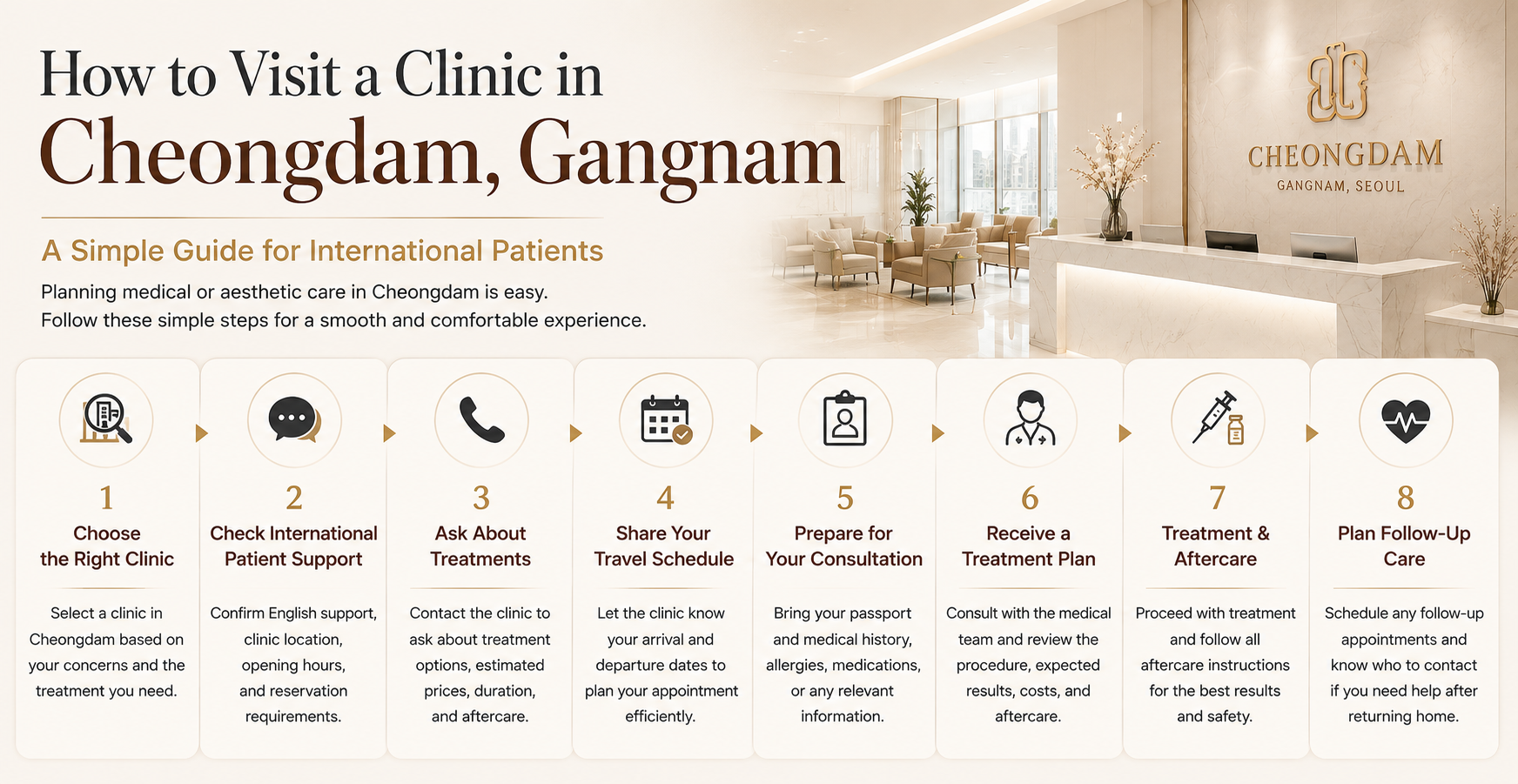
Foreign patients should confirm whether the clinic provides English-language consultation or interpreter support and whether the surgeon has experience with revision cases similar to theirs.
Patients should bring previous operative records, implant information, photographs, and other relevant medical documents whenever available.
Those traveling to Korea for revision surgery should also plan sufficient time for recovery and follow-up appointments.
Revision Rhinoplasty Consultation and Surgery Process in Seoul
A typical revision rhinoplasty process may include:
- Initial consultation and review of previous surgical history
- Examination of the current nasal structure
- Assessment of functional and aesthetic concerns
- Review of previous operative records or imaging when available
- Discussion of graft materials and surgical options
- Pre-operative evaluation and surgical planning
- Revision rhinoplasty and post-operative monitoring
- Follow-up care and recovery guidance
The exact process varies depending on the complexity of the revision.
Patients should understand the limitations of revision surgery, potential risks, expected changes, and recovery requirements before proceeding.
Revision Rhinoplasty vs. Primary Rhinoplasty
Primary rhinoplasty is performed on a nose that has not previously undergone rhinoplasty, while revision rhinoplasty is performed after previous nasal surgery.
Revision cases may involve scar tissue, altered anatomy, weakened structural support, or limited available cartilage.
As a result, revision rhinoplasty often requires more detailed planning and may have different surgical options and limitations.
The surgeon should evaluate the current condition of the nose rather than relying only on the original surgical plan.
Revision Rhinoplasty vs. Non-Surgical Correction
Some minor contour concerns may be addressed with non-surgical treatments in selected patients.
Injectable fillers can temporarily alter certain nasal contours, but they cannot reconstruct damaged cartilage or correct significant structural problems.
Non-surgical treatment also carries its own risks and may not be appropriate after previous nasal surgery.
A surgeon should evaluate the underlying problem before determining whether another surgery or a non-surgical option is appropriate.
Revision Rhinoplasty for Women and Men in Cheongdam
Revision rhinoplasty can be customized for both women and men according to individual nasal anatomy and previous surgical changes.
Women may seek correction of bridge, tip, asymmetry, or overall nasal proportions following previous surgery.
Men may consider revision for similar concerns, including structural changes, nasal contour irregularities, or functional problems.
Regardless of gender, the surgical plan should prioritize nasal structure, function, facial proportions, and realistic expectations.
Revision Rhinoplasty Care in Cheongdam, Seoul
Choosing revision rhinoplasty requires careful consideration because additional surgery can be more complex than a primary procedure.
Patients should consider the surgeon's qualifications, experience with revision cases, understanding of nasal anatomy, grafting techniques, surgical facilities, and approach to post-operative care.
Swelling can persist for an extended period after revision surgery, and the final nasal contour may take time to stabilize.
Patients searching for revision rhinoplasty in Cheongdam, revision rhinoplasty in Seoul, revision rhinoplasty in Korea, or revision rhinoplasty for foreigners can discuss their concerns with a qualified plastic surgeon before making a treatment decision.
Frequently Asked Questions
What is revision rhinoplasty?
Revision rhinoplasty is surgery performed to address aesthetic or functional concerns after previous nasal surgery.
It may involve reshaping, reconstructing, or reinforcing parts of the existing nasal framework.
Why do people get revision rhinoplasty?
Patients may seek revision surgery because of asymmetry, contour irregularities, changes in nasal tip or bridge shape, structural problems, breathing difficulties, implant concerns, or dissatisfaction with a previous result.
How long should I wait before revision rhinoplasty?
The appropriate timing varies depending on the previous procedure, healing process, and reason for revision.
Patients should generally allow adequate healing before elective revision, while complications or significant functional problems should be evaluated by a surgeon promptly.
Is revision rhinoplasty more difficult than primary rhinoplasty?
It can be. Previous surgery may create scar tissue, alter the nasal framework, weaken structural support, or reduce the amount of available cartilage.
These factors can make surgical planning more complex.
What cartilage can be used for revision rhinoplasty?
Depending on the individual case, surgeons may use remaining septal cartilage or cartilage from another area such as the ear or rib.
The appropriate graft material depends on the amount of structural support required and the patient's available tissue.
Can revision rhinoplasty improve breathing?
It may improve breathing when the underlying problem is related to nasal structural changes that can be surgically corrected.
Patients with breathing difficulties should receive a detailed functional evaluation.
Can foreigners get revision rhinoplasty in Korea?
Yes. International patients can seek revision rhinoplasty consultations and procedures in Korea, although language support, clinic availability, scheduling, and follow-up policies vary.
Revision Rhinoplasty Consultation in Cheongdam, Seoul
If you are considering revision rhinoplasty in Korea, a detailed consultation can help determine what has changed since your previous surgery and whether additional correction is appropriate.
Patients seeking revision rhinoplasty in Cheongdam, Seoul should confirm the surgeon's experience with revision cases, recommended technique, potential graft materials, expected recovery, consultation language, and follow-up care before surgery.
Whether you are concerned about nasal asymmetry, tip or bridge irregularities, implant-related changes, breathing difficulties, or dissatisfaction with a previous rhinoplasty, a qualified plastic surgeon can evaluate your current nasal structure and discuss the available options.