Stem Cell Therapy Cheongdam Seoul Clinic
Stem Cell Therapy and Regenerative Care in Korea
Stem Cell Therapy in Cheongdam, Seoul provides personalized regenerative care for international patients seeking advanced medical and aesthetic treatments in Korea. Treatment options may include regenerative procedures, skin rejuvenation, tissue repair, and customized care based on individual needs and goals. International patients can access patient-focused stem cell therapy in Cheongdam, Gangnam, with support designed to make treatment in Seoul easier and more comfortable.
What Is Stem Cell Therapy?
Stem cell therapy is a type of regenerative medicine that uses stem cells or cell-based products for specific medical or therapeutic purposes. Depending on the treatment, cells may be collected from the patient or obtained from another approved source, processed, and administered according to a medical protocol.
Stem cell therapies are being studied and used in different areas of medicine, but their indications, evidence, availability, and regulatory status vary significantly. A qualified healthcare professional should determine whether a specific stem cell therapy is appropriate for an individual patient.
Stem Cell Therapy in Cheongdam, Seoul
Patients living in Seoul or visiting Korea may consider stem cell therapy when looking for regenerative medicine or cell-based treatment options.
A consultation at a regenerative medicine or specialized medical clinic in Cheongdam can help determine whether a specific therapy is appropriate based on your medical history, current condition, previous treatments, medications, and treatment goals.
Because stem cell therapies differ considerably, patients should receive clear information about the type and source of cells, treatment protocol, expected outcomes, potential risks, and available clinical evidence.
How Does Stem Cell Therapy Work?
Stem cell therapy generally involves the administration of stem cells or cell-derived products with the intended purpose of supporting a specific biological or therapeutic process.
Depending on the treatment, the cells may have the ability to differentiate into certain cell types or interact with surrounding tissues through signaling and other biological mechanisms.
The exact mechanism varies by cell type, treatment method, and medical indication. Not every stem cell treatment has been proven effective for every condition, so individualized medical evaluation is important.
Where Are Stem Cells Obtained?
The source of cells depends on the specific therapy.
Some treatments use autologous cells, which are collected from the patient’s own body. Other therapies may use cells or cell-based products obtained from an approved donor source.
Before treatment, patients should ask their healthcare provider about the source of the cells, how they are collected and processed, and how the treatment is administered.
How Effective Is Stem Cell Therapy?
The effectiveness of stem cell therapy varies significantly depending on the medical condition, cell type, treatment protocol, and available clinical evidence.
Some stem cell-based therapies have established medical applications, while others remain investigational or have limited evidence for particular uses.
Patients should be cautious of treatments that promise guaranteed regeneration, permanent results, or cures for a wide range of unrelated conditions. A qualified healthcare provider can explain the expected benefits and limitations of a specific therapy.
Is Stem Cell Therapy Reversible?
Whether stem cell therapy can be reversed depends on the specific treatment.
Once cells or cell-derived products have been administered, they cannot necessarily be physically removed from the body. Some treatments may involve a single administration, while others may require multiple sessions according to a medical protocol.
Before treatment, patients should discuss the expected duration of effects, follow-up requirements, and what options are available if the desired outcome is not achieved.
What Are the Possible Side Effects of Stem Cell Therapy?
Potential risks vary depending on the type and source of cells, how they are processed, where they are administered, and the medical condition being treated.
Possible complications may include:
- Pain, swelling, or discomfort at the treatment site
- Bleeding or bruising
- Infection
- Inflammatory reactions
- Immune or allergic reactions in certain treatments
- Changes in the treated tissue
- Treatment-related complications specific to the administration method
Some unproven or inadequately regulated cell-based treatments may carry additional risks. Patients should receive a clear explanation of potential complications before treatment.
Who Should Consider Stem Cell Therapy?
Stem cell therapy may be considered by patients with a specific medical indication for which an appropriate and medically supported cell-based treatment is available.
However, it is not appropriate for everyone.
Your healthcare provider should review your medical history, current medications, diagnosis, previous treatments, and overall health before recommending therapy. Patients should also understand whether the proposed treatment is an approved therapy, part of a regulated clinical study, or an investigational treatment.
Stem Cell Therapy for Foreigners in Seoul, Korea
International residents, expatriates, students, and visitors in Korea may seek information about stem cell therapy and regenerative medicine in Seoul.
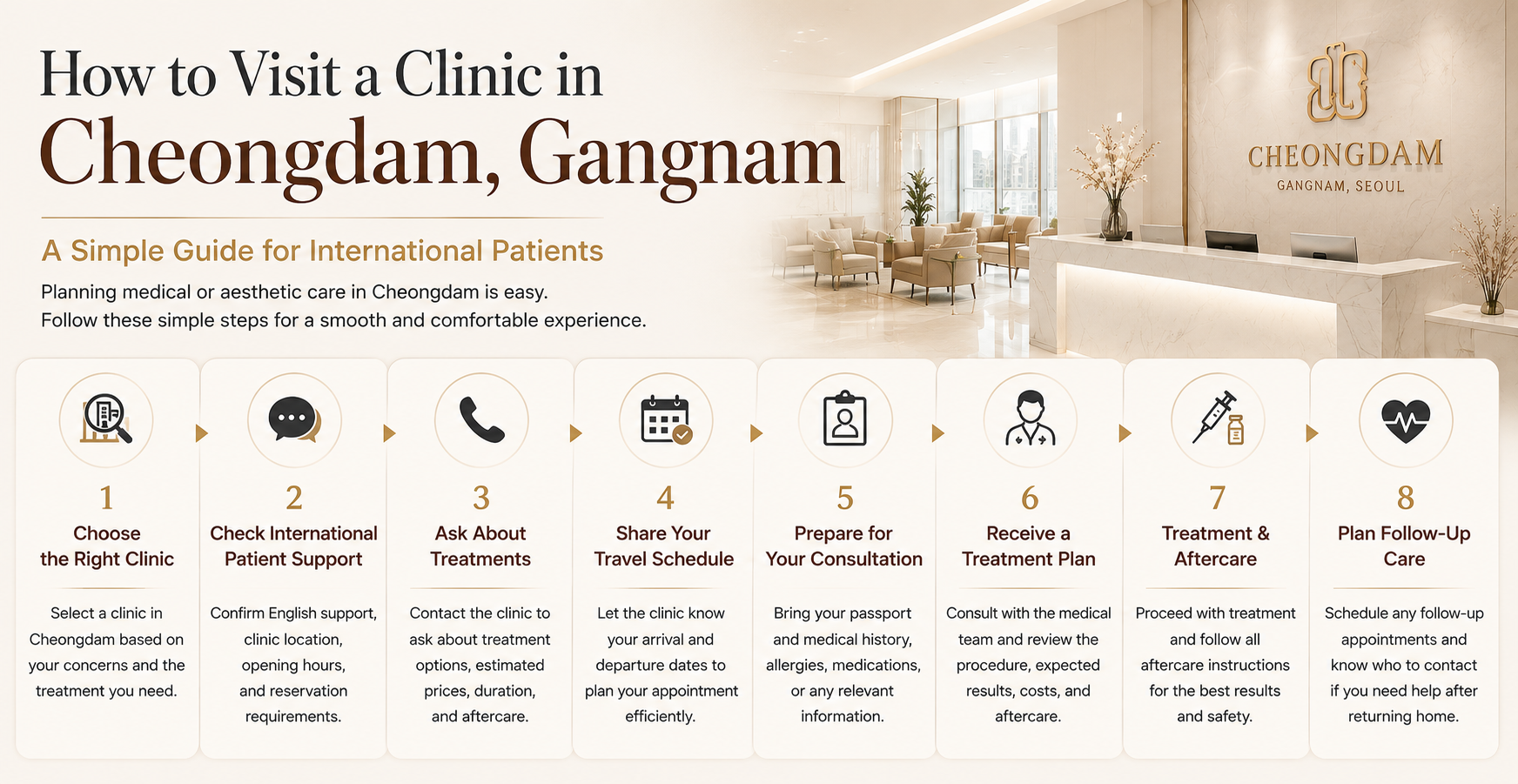
When choosing a clinic in Cheongdam or Gangnam, international patients may want to confirm whether English-language consultation is available and whether the specific stem cell therapy is currently offered.
It can also be helpful to bring information about your diagnosis, previous treatments, medications, allergies, medical records, and any relevant imaging or laboratory results.
Stem Cell Therapy Consultation and Treatment in Seoul
Stem cell therapy should be planned according to the individual medical indication and treatment protocol.
Patients may discuss:
- Medical history and current condition
- Previous treatments
- Diagnostic test results
- Type and source of stem cells
- Cell processing and preparation
- Method and location of administration
- Expected benefits and limitations
- Potential risks and side effects
- Follow-up and monitoring requirements
The exact process varies depending on the type of therapy and the medical institution providing treatment.
Stem Cell Therapy vs. Conventional Treatment
Stem cell therapy and conventional medical treatments serve different purposes and should not automatically be considered alternatives.
For some conditions, established conventional treatments may have stronger clinical evidence and remain the standard of care. Cell-based therapy may be considered when there is an appropriate medical indication and sufficient evidence or within a properly regulated treatment setting.
A healthcare professional can help compare the available options based on your individual condition.
Stem Cell Therapy vs. PRP Therapy
Stem cell therapy and platelet-rich plasma (PRP) therapy are both discussed within regenerative medicine, but they are different treatments.
PRP uses a concentrated portion of the patient’s own blood, while stem cell therapy involves the use of stem cells or cell-derived products. Their mechanisms, evidence, indications, and treatment protocols are not the same.
Patients should discuss which approach, if any, is medically appropriate for their specific condition.
Women’s and Men’s Health & Regenerative Medicine
Stem cell therapy may be discussed in different medical fields for both women and men. The appropriate treatment depends on the specific medical condition rather than gender alone.
Patients should receive an individualized medical assessment rather than choosing a cell-based treatment based solely on general wellness or anti-aging claims.
Regenerative Medicine Care in Cheongdam, Seoul
Follow-up care is an important part of stem cell therapy. Depending on the treatment, patients may require observation, laboratory testing, imaging, or additional medical consultations after administration.
International patients should confirm the recommended follow-up schedule before treatment, particularly if they plan to return to their home country shortly after therapy.
Frequently Asked Questions
What is stem cell therapy?
Stem cell therapy uses stem cells or cell-based products for specific medical or therapeutic purposes. The type of cells and treatment method vary according to the medical indication.
Is stem cell therapy approved for every condition?
No. Approved uses and available evidence vary considerably between different stem cell therapies and medical conditions. Patients should confirm the regulatory status and clinical evidence of the specific treatment being considered.
Can foreigners receive stem cell therapy in Korea?
International patients may be able to receive certain regenerative medicine treatments in Korea, depending on the specific therapy, medical indication, eligibility requirements, and applicable regulations.
What types of stem cells are used?
Different therapies may use different cell types and sources, including autologous cells collected from the patient or cells obtained from an approved donor source. The appropriate type depends on the treatment.
Is stem cell therapy safe?
Safety depends on the specific cells, processing method, administration technique, and medical indication. Potential risks should be discussed with a qualified healthcare professional before treatment.
How many stem cell therapy sessions are needed?
The number of treatments varies depending on the therapy and medical condition. Some protocols involve a single administration, while others may involve multiple treatments or follow-up sessions.
Do I need a consultation before stem cell therapy?
A medical consultation is important before treatment. Your healthcare provider should review your medical history, current condition, previous treatments, and treatment goals before determining whether a specific stem cell therapy is appropriate.
Stem Cell Therapy Consultation in Cheongdam, Seoul
If you are considering regenerative medicine or a cell-based treatment in Korea, a consultation with a qualified healthcare professional can help determine whether stem cell therapy in Seoul is suitable for your individual medical needs.
Patients seeking
stem cell therapy in Cheongdam, Seoul should confirm the specific treatment protocol, cell source, clinical evidence, regulatory status, potential risks, and follow-up requirements before proceeding with treatment.