Stem Cell Facial Cheongdam Seoul Clinic
Regenerative Skin Rejuvenation and Anti-Aging Facial in Korea
Stem cell facial treatments in Cheongdam, Seoul are regenerative aesthetic procedures that may involve cell-based or cell-derived materials, but the exact product, biological source, processing method, treatment technique, and clinical evidence can vary substantially. Patients considering a stem cell facial in Korea should confirm exactly what material is being used, whether it contains living cells or cell-derived components, its regulatory status, expected benefits, potential risks, and whether a more established skin-rejuvenation treatment may be appropriate.
Stem Cell Facial in Cheongdam, Seoul
“Stem cell facial” is a broad aesthetic term rather than one standardized medical procedure.
Depending on the clinic, it may refer to a genuine cell-based treatment, adipose-derived biological material, stem-cell-conditioned media, extracellular vesicle or exosome-related products, microneedling combined with cell-derived ingredients, or topical products marketed using regenerative terminology.
These approaches are biologically and medically different.
Patients should therefore ask what exact material is being used before assuming that every treatment advertised as a stem cell facial contains living stem cells.
What Is a Stem Cell Facial?
A stem cell facial is generally marketed as a regenerative skin-rejuvenation treatment intended to support improvements in skin texture, hydration, firmness, or overall appearance.
However, the term does not identify one specific medical technology.
A treatment may involve:
- Living autologous cells
- Donor-derived biological material
- Adipose-derived cellular preparations
- Stem-cell-conditioned media
- Cell-derived growth factors
- Exosome-related products
- Topical cosmetic formulations
- Microneedling or device-assisted delivery
Because these products are not equivalent, patients should receive a precise explanation of what is actually being applied or administered.
Does a Stem Cell Facial Contain Real Stem Cells?
Not necessarily.
Some treatments marketed as stem cell facials contain no living stem cells at all.
They may instead use substances produced by cultured cells, such as conditioned media or extracellular vesicle-related products.
Others may use cosmetic ingredients marketed as “stem cell-derived.”
Patients should ask directly:
Does this treatment contain living human stem cells?
If the answer is yes, the type, source, processing, and regulatory status of those cells should be clearly explained.
What Are Stem Cells?
Stem cells are cells capable of self-renewal and, depending on their type, differentiation into other specialized cells.
Different stem-cell populations have different biological characteristics.
In medicine, some stem-cell therapies are well established for specific diseases, while many other regenerative applications remain investigational.
The existence of legitimate stem-cell medicine does not mean that every commercial facial marketed with the term “stem cell” has proven anti-aging effects.
Stem Cell Facial vs. Stem Cell Therapy
A facial treatment marketed using stem-cell terminology is not automatically equivalent to medical stem-cell therapy.
Medical cell therapies can involve complex processes for harvesting, processing, quality control, storage, and administration.
A cosmetic facial may instead involve topical or minimally invasive use of cell-derived ingredients.
Patients should understand whether the procedure is a true cell-based medical intervention or a cosmetic treatment using regenerative marketing language.
Stem Cell Facial vs. Exosome Facial
Stem cells and exosomes are not the same.
Stem cells are living cells.
Exosomes are small extracellular vesicles released by cells and can contain proteins, lipids, and nucleic acids involved in cell-to-cell communication.
Exosome-related products are being investigated in regenerative medicine and aesthetics, but they should not be described as living stem cells.
The evidence and regulatory status of the exact exosome product should be assessed separately.
Stem Cell Facial vs. PRP Facial
PRP, or platelet-rich plasma, is produced from the patient's own blood.
It contains concentrated platelets and associated growth factors.
PRP does not contain stem cells in the same sense as a true cell-based therapy and should not be marketed as interchangeable with stem-cell treatment.
Both may appear under the broad category of regenerative aesthetics, but they use different biological materials.
Stem Cell Facial vs. Rejuran
Rejuran is a polynucleotide-based injectable treatment.
It is not a stem-cell procedure.
Rejuran is commonly used in Korean aesthetic medicine for skin-quality concerns, while a genuine cell-based treatment involves a different biological and regulatory framework.
Patients should compare actual ingredients and evidence rather than relying on the broad label “regenerative.”
Stem Cell Facial vs. Juvelook
Juvelook contains PDLLA and hyaluronic acid.
It is not a stem-cell product.
Juvelook is commonly used as a collagen-stimulating injectable treatment for skin texture and selected scar or pore concerns.
A stem-cell or cell-derived treatment therefore differs in formulation, mechanism, evidence, and regulatory considerations.
Stem Cell Facial vs. Skin Booster
Skin boosters generally refer to injectable products formulated for skin quality, hydration, texture, or collagen-related treatment.
They may contain hyaluronic acid, polynucleotides, PDLLA, or other materials.
These are not automatically stem-cell treatments.
The term “stem cell skin booster” should therefore be examined carefully to determine whether it describes a true cell-based product or simply a marketing label.
How Does a Stem Cell Facial Work?
There is no single mechanism because the treatments vary.
True cell-based therapies may be intended to influence tissue repair through cellular activity and paracrine signaling.
Cell-derived products may instead contain signaling molecules or vesicles proposed to influence skin cells.
Microneedling or energy-based devices may be combined with these materials to facilitate delivery into superficial skin layers.
The expected biological effect should be supported by evidence for the exact product and treatment protocol being used.
Can Stem Cell Facials Improve Skin Texture?
Regenerative medicine research has investigated effects involving fibroblasts, extracellular matrix, tissue repair, and skin remodeling.
Some cell-based or cell-derived approaches may show promise for selected skin-quality concerns.
However, evidence varies considerably between products.
Patients should not assume that every treatment marketed as a stem-cell facial reliably improves texture.
Clinical claims should be based on studies involving the same product, preparation, administration method, and patient population.
Can Stem Cell Facials Improve Fine Lines?
Fine lines can be influenced by collagen loss, sun damage, facial movement, dehydration, and skin thinning.
Regenerative approaches are being investigated for their potential effects on tissue remodeling.
However, an unspecified stem-cell facial should not be guaranteed to erase fine lines.
Depending on the cause, laser resurfacing, RF microneedling, botulinum toxin, skin boosters, or other treatments may have more established roles.
Can Stem Cell Facials Stimulate Collagen?
Stem-cell and cell-derived signaling pathways have been studied in relation to fibroblast activity and collagen production.
This provides a biological rationale for regenerative skin research.
However, biological plausibility is not the same as guaranteed clinical effectiveness.
A clinic should be able to explain what evidence shows collagen-related changes for the exact treatment being offered.
Can Stem Cell Facials Tighten the Skin?
A regenerative facial may be marketed for skin firmness or tightening.
However, these effects should not be assumed to match those of RF, HIFU, laser tightening, or surgery.
Significant skin laxity generally involves deeper structural changes that cannot be corrected through a superficial facial alone.
Patients with pronounced sagging should receive an anatomical assessment before choosing treatment.
Can Stem Cell Facials Reverse Aging?
No facial treatment should be described as reversing biological aging.
A treatment may improve selected aspects of skin appearance, but aging involves changes in skin, fat, muscle, bone, blood vessels, hormones, and other tissues.
Terms such as reverse aging, cellular age reset, or permanent rejuvenation should be treated cautiously.
If a facial claims to rewind the biological clock, the marketing department has wandered several miles ahead of gerontology.
What Skin Concerns Are Regenerative Facials Used For?
Depending on the treatment and evidence, regenerative facials may be marketed for concerns involving:
- Dry or dull-looking skin
- Uneven texture
- Fine lines
- Reduced skin firmness
- Photoaging
- Post-procedure recovery
- Selected scar concerns
- Overall skin quality
The appropriate treatment depends on the actual diagnosis.
Pigmentation, active acne, vascular redness, deep scars, volume loss, and facial laxity may require different approaches.
Stem Cell Facial for Dry Skin
Dryness can result from impaired barrier function, environmental exposure, skincare habits, aging, or dermatological conditions.
A regenerative facial may improve temporary hydration depending on the products used.
However, hydration alone does not prove stem-cell activity.
Patients with persistent dryness should also evaluate skincare, barrier function, medications, dermatitis, and other possible causes.
Stem Cell Facial for Acne Scars
Acne scars are structural changes in the skin and can include rolling, boxcar, and ice-pick patterns.
Regenerative treatments are being investigated as possible components of scar therapy.
However, deeper scars often require procedures such as subcision, laser resurfacing, RF microneedling, chemical reconstruction, or combination treatment.
A stem-cell facial should not be guaranteed to erase acne scars.
Stem Cell Facial After Laser Treatment
Some clinics use regenerative or cell-derived products after laser, microneedling, or energy-based treatments.
The intended goal may be to support recovery or skin quality.
However, applying a biologically active product to recently treated skin can involve different safety considerations from applying it to intact skin.
The product, sterility, route of delivery, and clinical evidence should therefore be evaluated carefully.
Stem Cell Facial With Microneedling
Microneedling creates controlled microchannels in the skin.
Some clinics combine this with products marketed as stem-cell-derived or regenerative.
Patients should ask whether the material is intended and appropriately regulated for application to disrupted skin.
A cosmetic serum becoming closer to the dermis does not magically transform it into an approved injectable medicine.
Stem Cell Facial With Laser or Energy-Based Devices
Regenerative products may also be combined with lasers, RF microneedling, ultrasound, or other aesthetic procedures.
Combination treatment should be planned carefully.
The safety of each component does not automatically prove the safety of the combination.
Patients should ask what evidence supports the exact treatment sequence and product-delivery method.
Autologous vs. Donor-Derived Stem Cell Treatments
Autologous means the biological material originates from the same patient.
Allogeneic or donor-derived means it originates from another person.
Autologous origin may reduce certain immune-related concerns, but it does not automatically make a treatment safe or proven.
Processing, contamination control, cell manipulation, administration, and biological behavior still matter.
What Are Adipose-Derived Stem Cells?
Adipose tissue contains multiple cell populations, including stromal and progenitor cells studied in regenerative medicine.
Some regenerative treatments use adipose-derived materials.
However, harvesting and processing fat-derived cellular material can involve procedures substantially more complex than an ordinary facial.
Patients should ask how the tissue is collected, processed, tested, stored, and administered.
Is a Stem Cell Facial Injectable?
It depends on the treatment.
Some procedures may involve injections.
Others may involve topical application, microneedling-assisted delivery, or another method.
The route of administration should be explained clearly because injection into the skin carries different risks from topical use.
Patients should never assume the route based on the phrase “facial.”
What Happens During a Stem Cell Facial Consultation?
A consultation should first identify the patient's actual concerns and determine whether a regenerative treatment is appropriate.
The healthcare professional should review:
- Skin condition
- Medical history
- Medications
- Allergies
- Previous procedures
- Pregnancy or breastfeeding status
- History of abnormal scarring
- Treatment goals
If a stem-cell or cell-derived treatment is proposed, patients should also receive information about:
- Exact product or cell type
- Biological source
- Processing method
- Whether living cells are present
- Regulatory status
- Route of administration
- Clinical evidence
- Risks
- Expected results
- Alternatives
- Follow-up care
What Are the Risks of Stem Cell Facial Treatments?
Risk depends on the exact procedure and product.
Potential complications may include:
- Redness
- Swelling
- Bruising
- Infection
- Inflammatory reactions
- Allergic or immune reactions
- Pigmentation changes
- Scarring
- Injection-related complications
- Contamination-related complications
- Unexpected tissue responses
- Lack of expected improvement
True cell-based therapies may carry additional biological risks not relevant to ordinary cosmetic facials.
The exact risk profile should therefore be discussed for the specific treatment.
Are Stem Cell Facials Safe?
There is no universal answer because “stem cell facial” can refer to many different procedures.
A topical cosmetic product and an injected cell preparation have completely different safety profiles.
Patients should evaluate the exact product, manufacturing standards, regulatory status, administration technique, and available clinical evidence.
The word “natural” should not be used as a substitute for safety data.
How Long Do Stem Cell Facial Results Last?
There is no universal evidence-based duration.
The result depends on the actual treatment, skin condition, administration method, treatment course, and individual response.
If the procedure primarily improves temporary hydration, results may differ substantially from a genuine regenerative medical intervention.
Permanent anti-aging effects should not be guaranteed.
How Many Stem Cell Facial Treatments Are Needed?
There is no standardized schedule applicable to every treatment marketed as stem-cell facial therapy.
Treatment frequency should depend on the specific product, evidence, clinical protocol, and individual response.
Patients should be cautious when a fixed package of repeated treatments is recommended without clear explanation of why that schedule is appropriate.
Is There Downtime After a Stem Cell Facial?
Downtime depends on the method.
A topical treatment may involve little recovery, while injections, microneedling, or combined laser procedures may cause redness, swelling, bruising, tenderness, or temporary sensitivity.
Patients should receive aftercare instructions specific to the procedure rather than generic claims of “zero downtime.”
Who May Not Be Suitable for a Stem Cell Facial?
Suitability depends on the exact product and treatment method.
Treatment may need to be avoided or postponed in patients with active skin infection, certain immune conditions, cancer history, pregnancy, breastfeeding, bleeding disorders, allergies, or other relevant medical conditions.
Patients should undergo an individualized assessment before treatment.
Stem Cell and Regenerative Medicine Regulation in Korea
Korea regulates cell-based therapies and advanced regenerative medicine through specific medical and regulatory frameworks.
Not every cosmetic procedure advertised using the term “stem cell” is automatically an approved stem-cell therapy.
Patients should ask whether the treatment involves an approved product, an appropriately authorized regenerative-medicine procedure, clinical research, or a cosmetic product containing cell-derived ingredients.
These categories should not be blurred together.
Questions to Ask Before a Stem Cell Facial in Korea
Patients considering a regenerative facial may wish to ask:
- Does the treatment contain living stem cells?
- If so, what type of cells?
- Are they autologous or donor-derived?
- Where are they obtained?
- How are they processed?
- Is the material cultured?
- Is it injected or applied topically?
- What is the Korean regulatory status?
- What human clinical evidence supports this use?
- What are the potential complications?
- Is the treatment sterile?
- What follow-up care is available?
Clear answers matter considerably more than a brochure containing the word “regeneration” in unusually large typography.
Stem Cell Facial for Foreigners in Seoul, Korea
International residents, expatriates, students, business travelers, and medical tourists may seek regenerative aesthetic treatments while living in or visiting Seoul.
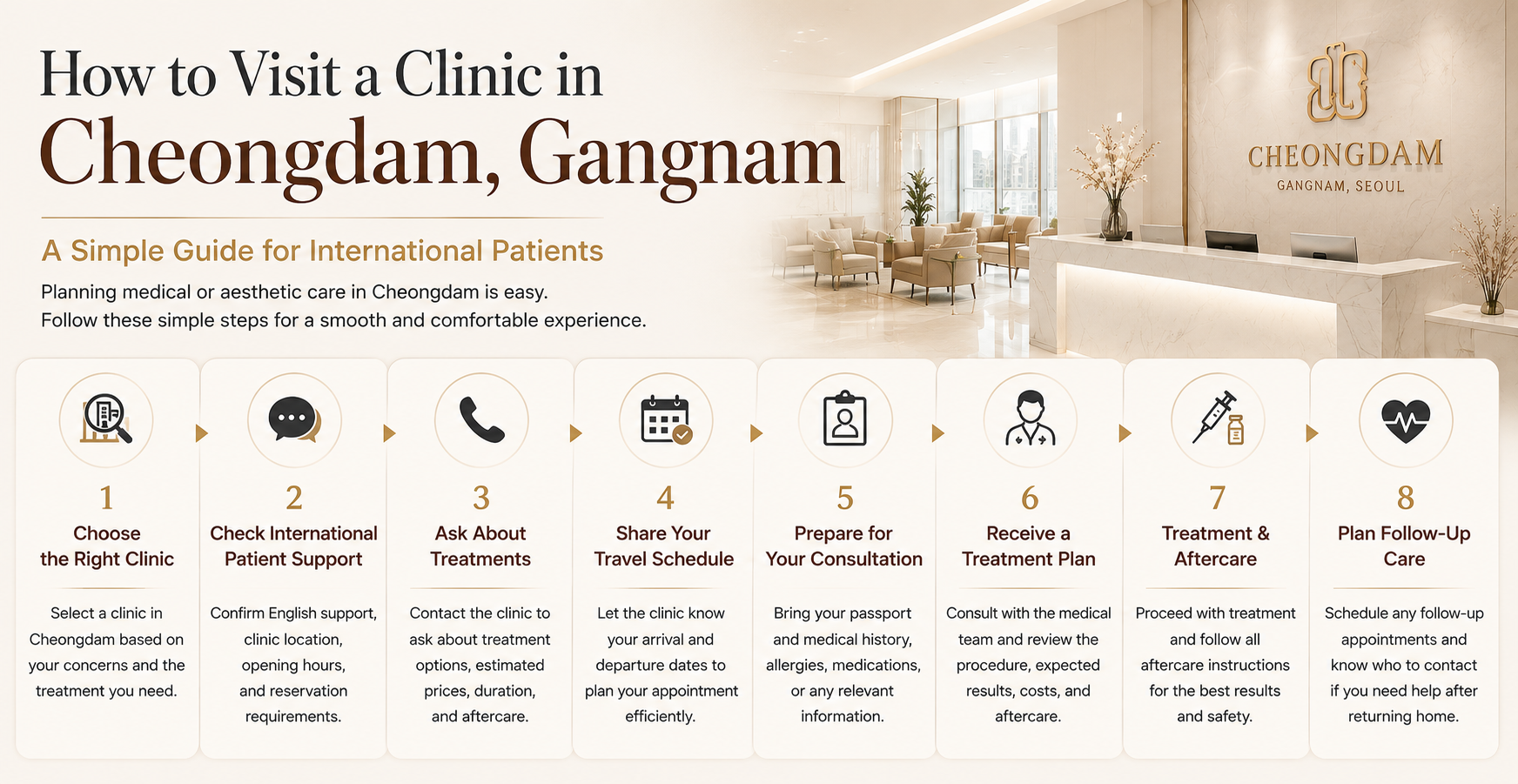
Foreign patients considering a stem cell facial in Cheongdam or Gangnam should confirm whether English-language consultation and informed-consent documents are available.
They should also request the exact product name, biological source, processing method, route of administration, regulatory status, clinical evidence, pricing, possible complications, and follow-up arrangements.
Patients traveling specifically for treatment should understand how complications would be managed after returning home.
Choosing a Stem Cell Facial Clinic in Cheongdam
Patients should look beyond terms such as “premium regenerative facial,” “cellular rejuvenation,” or “anti-aging stem cell therapy.”
Important considerations include the qualifications of the healthcare professional, exact biological material, product traceability, regulatory status, sterile handling, clinical evidence, informed consent, realistic expectations, complication management, and follow-up care.
A credible clinic should also be willing to explain whether an established treatment may be more appropriate for the patient's actual concern.
Frequently Asked Questions
What is a stem cell facial?
A stem cell facial is a broad term used for regenerative aesthetic treatments involving stem cells, cell-derived products, conditioned media, exosome-related materials, or other regenerative ingredients. It is not one standardized procedure.
Does a stem cell facial contain real stem cells?
Not always. Many products marketed using stem-cell terminology contain cell-derived substances rather than living stem cells.
Are exosomes the same as stem cells?
No. Exosomes are extracellular vesicles released by cells and are not living stem cells.
Is PRP a stem cell facial?
No. PRP is produced from the patient's blood and contains concentrated platelets. It is biologically different from stem-cell treatment.
Is Rejuran a stem cell treatment?
No. Rejuran is based on polynucleotides.
Is Juvelook a stem cell treatment?
No. Juvelook contains PDLLA and hyaluronic acid.
Can a stem cell facial stimulate collagen?
Regenerative-medicine research has investigated cell signaling related to fibroblasts and collagen, but clinical claims depend on the exact product and treatment method.
Can a stem cell facial remove wrinkles?
Complete wrinkle removal should not be guaranteed. Fine lines have multiple causes, and established treatments may be more appropriate depending on the patient.
Can stem cell facials reverse aging?
No treatment should be assumed to reverse biological aging. A procedure may improve selected aspects of skin appearance without reversing the overall aging process.
Are stem cell facials safe?
Safety depends on the exact product, source, processing, route of administration, regulatory status, and individual patient. The term “stem cell facial” alone does not establish safety.
How long do stem cell facial results last?
There is no universal duration because treatments marketed under this name vary substantially.
How many treatments do I need?
There is no standardized treatment schedule. The appropriate number should be based on the exact intervention, available evidence, and individual response.
Can foreigners get stem cell facials in Korea?
International patients may seek regenerative aesthetic consultations in Korea, but treatment availability and regulatory status depend on the exact procedure or product.
Where can I get a stem cell facial in Cheongdam, Seoul?
Patients interested in regenerative skin treatment can consult qualified medical professionals in Cheongdam and the surrounding Gangnam area. Before treatment, they should verify the exact material being used, regulatory status, administration method, supporting evidence, potential risks, and follow-up care.
Stem Cell Facial Consultation in Cheongdam, Seoul
Patients interested in regenerative skin rejuvenation should begin by identifying exactly what a treatment marketed as a “stem cell facial” contains and how it is administered.
Patients searching for
Stem Cell Facial Cheongdam,
Stem Cell Facial Seoul,
Regenerative Facial Korea,
Anti-Aging Facial Gangnam,
Regenerative Skin Treatment Seoul, or
Stem Cell Facial for Foreigners in Korea can consult a qualified healthcare professional to discuss the exact treatment, available evidence, potential risks, regulatory status, alternatives, and individualized treatment planning.