Mini Facelift Cheongdam Seoul Clinic
Mini Facelift Surgery and Facial Rejuvenation in Korea
Mini Facelift in Cheongdam, Seoul provides personalized surgical care for international patients seeking improved facial contours and a more youthful appearance in Korea. Treatment may address mild to moderate sagging, jowls, and loose skin based on individual concerns and goals. International patients can access patient-focused mini facelift care in Cheongdam, Gangnam, with support designed to make treatment in Seoul easier and more comfortable.
What Is a Mini Facelift?
A mini facelift is a surgical facial rejuvenation procedure designed to address mild to moderate sagging, particularly around the lower face, jawline, and jowls.
Compared with some more extensive facelift techniques, a mini facelift may use a more limited surgical approach. However, the exact technique and extent of surgery vary between patients and surgeons.
A consultation with a qualified plastic surgeon is important to determine whether a mini facelift is appropriate for the patient's facial anatomy, degree of skin laxity, and aesthetic goals.
Mini Facelift in Cheongdam, Seoul
Cheongdam is a popular area in Seoul for plastic surgery and facial rejuvenation.
Patients considering a mini facelift in Cheongdam may consult with a plastic surgeon to evaluate facial sagging, skin laxity, jowls, and jawline definition.
The surgeon may also assess facial volume, skin quality, previous procedures, and the condition of the neck before recommending an appropriate treatment approach.
What Does a Mini Facelift Address?
A mini facelift may be considered for concerns such as:
- Mild to moderate facial sagging
- Early jowling
- Loose skin around the jawline
- Reduced lower-face definition
- Mild cheek laxity
- Early signs of facial aging
- Mild tissue descent around the lower face
A mini facelift is generally more focused on the lower face than procedures designed to treat extensive facial and neck aging.
The areas treated depend on the patient's anatomy and the surgical technique selected.
Mini Facelift Techniques in Cheongdam
The term "mini facelift" can refer to different surgical approaches depending on the surgeon and clinic.
Limited Incision Facelift
A limited-incision approach may use shorter or more limited incisions compared with some traditional facelift techniques.
It may be considered when the primary concern involves localized or relatively mild sagging.
SMAS-Based Mini Facelift
Some mini facelift procedures may involve treatment of the SMAS, a deeper supporting layer beneath the skin.
Addressing deeper tissues may help improve lower-face contour in appropriately selected patients.
Lower Face Lift
A mini facelift may focus primarily on the lower face, including the jawline and jowls.
The appropriate approach depends on the location and degree of tissue laxity.
Mini Facelift and Jawline Definition
Changes in the jawline are a common reason patients consider facial lifting procedures.
A mini facelift may improve the appearance of early jowling and loose skin along the lower face, potentially creating a more defined jawline.
However, a facelift does not directly change the underlying facial bone structure.
Patients with concerns involving bone structure, significant fat deposits, or neck laxity may require a different or combined treatment approach.
Mini Facelift and Neck Aging
A mini facelift primarily focuses on the face, although some techniques may provide improvement around the upper neck or jawline.
Patients with significant neck skin laxity, prominent neck bands, or more extensive neck aging may require a neck lift or another procedure.
During consultation, the surgeon can determine whether treatment should be limited to the lower face or extended to the neck.
Mini Facelift and Non-Surgical Lifting
Some patients consider a mini facelift after trying non-surgical lifting treatments.
Non-surgical options may include ultrasound or radiofrequency-based treatments, injectables, lasers, and other energy-based procedures.
These treatments generally involve less downtime but do not reposition facial tissues in the same way as surgical lifting.
A mini facelift may be considered when the patient wants a surgical approach to mild or moderate tissue laxity.
What Are the Possible Risks of Mini Facelift Surgery?
A mini facelift involves surgical risks that should be discussed before treatment.
Possible risks may include swelling, bruising, bleeding, infection, scarring, asymmetry, changes in sensation, temporary or persistent nerve-related changes, and dissatisfaction with the aesthetic result.
The extent of these risks varies according to the surgical technique, individual anatomy, and medical condition.
Patients should discuss anesthesia, incision placement, complications, recovery, and aftercare with their surgeon before surgery.
Who Should Consider a Mini Facelift?
A mini facelift may be considered by adults with relatively mild to moderate lower-face laxity who are seeking surgical facial rejuvenation.
Common concerns include:
- Early jowls
- Mild jawline sagging
- Loose lower-face skin
- Mild cheek descent
- Reduced facial definition
- Early signs of facial aging
A mini facelift may not be appropriate for patients with extensive facial or neck laxity.
A qualified plastic surgeon should evaluate the patient's facial structure, skin condition, health, and expectations before recommending treatment.
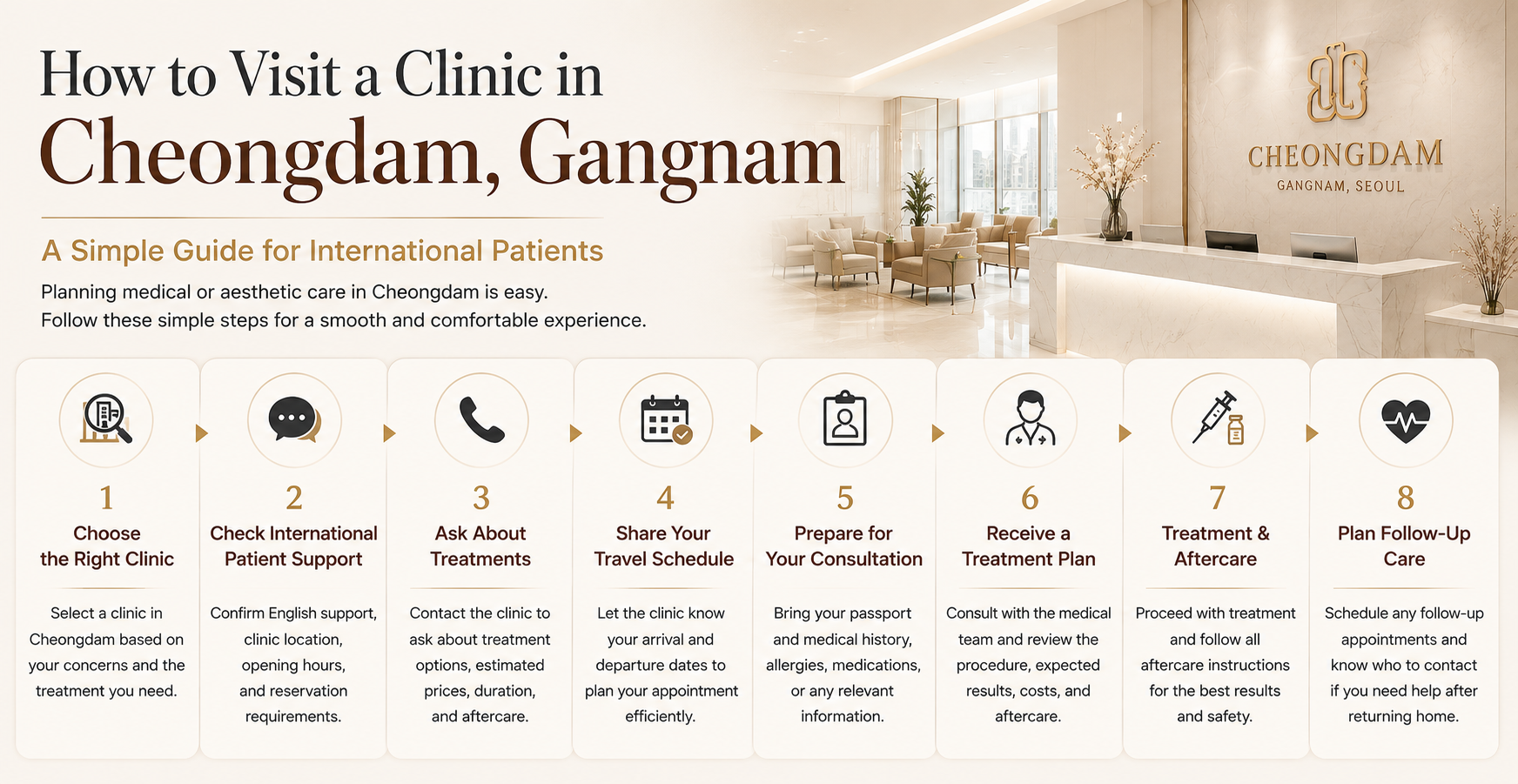
Mini Facelift for Foreigners in Seoul, Korea
International patients may consider Seoul for mini facelift surgery and other facial rejuvenation procedures.
Foreign patients should confirm whether the clinic provides English-language consultation or interpreter support and whether the surgeon has experience performing mini facelift procedures.
Patients traveling to Korea should also plan enough time for recovery and follow-up care.
Before surgery, it is helpful to discuss post-operative appointments, wound care, emergency contact procedures, and communication after returning home.
Mini Facelift Consultation and Surgery Process in Seoul
A typical mini facelift process may include:
- Initial consultation and medical history review
- Assessment of facial laxity and skin condition
- Discussion of treatment goals and surgical options
- Pre-operative examination and surgical planning
- Mini facelift surgery and post-operative monitoring
- Follow-up care and recovery guidance
The exact process varies according to the surgical technique and individual needs.
Patients should understand the expected changes, limitations, potential risks, incision locations, and recovery requirements before proceeding.
Mini Facelift vs. Full Facelift
A mini facelift generally uses a more limited surgical approach and is often considered for patients with less extensive facial aging.
A full or more extensive facelift may be considered when there is greater skin laxity, deeper tissue descent, or more widespread aging involving the lower face and neck.
The difference is not simply the size of the incision. Surgical technique, tissue repositioning, treatment areas, and the patient's anatomy all influence the appropriate procedure.
A surgeon should determine which approach is suitable after an individual examination.
Mini Facelift vs. Non-Surgical Lifting
Non-surgical lifting treatments may be appropriate for patients with early skin laxity or those who prefer to avoid surgery.
A mini facelift can provide a surgical approach for patients with more noticeable tissue descent or those seeking a greater degree of structural correction.
Non-surgical treatments generally have less downtime, while a mini facelift requires surgical recovery.
The appropriate option depends on the patient's concerns, anatomy, expectations, and tolerance for surgery and recovery.
Mini Facelift for Women and Men in Cheongdam
Mini facelift surgery can be customized for both women and men according to individual facial anatomy.
Women may seek improvement in early jowling, cheek laxity, and jawline definition.
Men may consider a mini facelift for lower-face sagging or changes in jawline definition, with surgical planning taking facial hair patterns and individual anatomy into consideration.
Regardless of gender, the treatment plan should be based on the patient's specific facial structure and goals.
Mini Facelift Care in Cheongdam, Seoul
Choosing a mini facelift involves more than selecting a procedure because it has a shorter or less extensive approach.
Patients should consider the surgeon's qualifications, experience with facial lifting, surgical technique, incision planning, safety protocols, and post-operative care.
Swelling, bruising, tightness, and temporary changes in sensation can occur during recovery, and the timeline varies between individuals.
Patients searching for mini facelift in Cheongdam, mini facelift in Seoul, mini facelift surgery in Korea, or mini facelift for foreigners can discuss their concerns with a qualified plastic surgeon before making a treatment decision.
Frequently Asked Questions
What is a mini facelift?
A mini facelift is a surgical facial rejuvenation procedure that generally focuses on mild to moderate sagging of the lower face, jawline, and jowls.
The exact technique and treatment area vary between patients.
Is a mini facelift less invasive than a full facelift?
A mini facelift generally uses a more limited surgical approach, but it is still surgery and involves risks, incisions, anesthesia considerations, and recovery.
The level of invasiveness depends on the specific surgical technique.
Who is a good candidate for a mini facelift?
Patients with relatively mild to moderate lower-face laxity, early jowling, or reduced jawline definition may be candidates.
A surgeon should determine suitability after evaluating facial anatomy, skin condition, health, and expectations.
How long is recovery after a mini facelift?
Recovery varies depending on the surgical technique and individual healing.
Swelling, bruising, tightness, and temporary changes in sensation may occur during the early recovery period. Your surgeon should provide a personalized recovery timeline.
Is a mini facelift better than non-surgical lifting?
Neither option is universally better.
A mini facelift may be more appropriate for certain degrees of tissue laxity, while non-surgical treatments may be suitable for milder concerns or patients who prefer to avoid surgery.
Can a mini facelift be combined with other procedures?
In some cases, a mini facelift may be combined with procedures such as neck lifting, eyelid surgery, or fat grafting.
Whether combination treatment is appropriate depends on the patient's health, anatomy, surgical goals, and overall recovery requirements.
Can foreigners get a mini facelift in Korea?
Yes. International patients can seek mini facelift consultations and surgery in Korea, although clinic availability, language support, scheduling, and follow-up policies vary.
Mini Facelift Consultation in Cheongdam, Seoul
If you are considering a mini facelift in Korea, an individualized consultation can help determine whether this approach is appropriate for your degree of facial aging and desired outcome.
Patients seeking mini facelift in Cheongdam, Seoul should confirm the surgeon's experience, recommended technique, incision planning, expected recovery, consultation language, and follow-up care before surgery.
Whether you are concerned about early jowls, mild cheek sagging, or reduced jawline definition, a qualified plastic surgeon can evaluate your facial structure and discuss the available surgical options.