Vaginal Tightening Cheongdam Seoul Clinic
Women’s Intimate Rejuvenation and Wellness Care in Korea
Vaginal tightening in Cheongdam, Seoul may refer to surgical or nonsurgical procedures intended to address concerns about vaginal laxity, but the appropriate treatment depends on individual anatomy, symptoms, and underlying causes. Women considering vaginal rejuvenation or intimate wellness care in Korea should receive an individualized medical evaluation to discuss treatment options, realistic expectations, potential risks, alternatives, and recovery.
Vaginal Tightening in Cheongdam, Seoul
Women may notice changes in vaginal or pelvic sensation following pregnancy, childbirth, aging, hormonal changes, or other life events. Some describe these changes as vaginal laxity or looseness and seek medical advice about vaginal tightening or intimate rejuvenation treatments.
However, the sensation of vaginal laxity can have different causes. Pelvic floor weakness, childbirth-related injury, pelvic organ prolapse, hormonal changes, and other gynecological conditions may contribute to symptoms.
A medical evaluation can help identify the underlying concern and determine whether pelvic floor treatment, medical therapy, surgery, another intervention, or no treatment is appropriate.
What Is Vaginal Tightening?
“Vaginal tightening” is a broad term rather than one standardized medical procedure.
It may be used to describe surgical procedures involving vaginal or perineal tissues, as well as nonsurgical treatments marketed for vaginal laxity or intimate rejuvenation.
Because treatments marketed under the same name can be very different, patients should ask exactly which procedure or device is being recommended, which tissues are being treated, and what evidence supports the proposed treatment.
What Is Vaginal Rejuvenation?
“Vaginal rejuvenation” is commonly used as a marketing term for various procedures involving the vagina, vulva, or surrounding tissues.
It does not refer to one specific medical diagnosis or universally standardized treatment.
The term may be used for procedures such as vaginoplasty or perineoplasty and for some energy-based treatments marketed as nonsurgical vaginal tightening.
Patients should therefore focus on the exact medical procedure being proposed rather than relying solely on terms such as “rejuvenation,” “tightening,” or “restoration.”
Why Do Women Consider Vaginal Tightening?
Reasons for seeking consultation vary from person to person.
Some women notice changes following pregnancy or vaginal childbirth. Others may experience pelvic floor symptoms, changes in vaginal sensation, discomfort during sexual activity, vaginal dryness, or other intimate health concerns.
Because these symptoms can have different causes, vaginal tightening should not automatically be assumed to be the appropriate treatment.
An individualized gynecological assessment can help determine whether an underlying medical condition is contributing to the symptoms.
Vaginal Tightening After Childbirth
Pregnancy and childbirth can affect vaginal tissues, the perineum, and pelvic floor muscles.
Some women experience changes in sensation or pelvic support after delivery. Others may develop urinary symptoms, pelvic floor weakness, pelvic organ prolapse, discomfort, or changes associated with childbirth-related injuries.
These conditions may require different forms of treatment.
Depending on the diagnosis, treatment options can include pelvic floor rehabilitation, medical management, reconstructive procedures, or other individualized care rather than cosmetic vaginal tightening.
Surgical Vaginal Tightening
Surgical vaginal tightening may involve procedures affecting vaginal or perineal tissues.
The exact technique depends on anatomy, symptoms, and the reason for treatment. Procedures described as vaginoplasty or perineoplasty may sometimes be marketed under the broader category of vaginal tightening.
Surgery involves potential complications, including pain, bleeding, infection, scarring, wound-healing problems, changes in sensation, painful intercourse, dissatisfaction with the outcome, and possible additional treatment.
A qualified surgeon should explain the exact procedure, expected changes, risks, alternatives, and recovery before surgery.
Nonsurgical Vaginal Tightening
Laser, radiofrequency, and other energy-based treatments are sometimes marketed as nonsurgical vaginal tightening or vaginal rejuvenation.
These treatments should not be considered automatically equivalent to surgical procedures, and broad claims about improving vaginal tightness, sexual function, urinary symptoms, or menopause-related symptoms should be approached carefully.
Patients considering a nonsurgical treatment should ask which device will be used, what condition it is intended to treat, what clinical evidence supports that use, and what potential adverse effects are associated with the procedure.
Is Laser Vaginal Tightening Safe?
Laser treatments are sometimes marketed for vaginal rejuvenation or tightening, but patients should understand the limitations of available evidence.
Energy-based vaginal treatments can have potential adverse effects, including pain, burns, scarring, painful intercourse, and persistent discomfort.
A medical consultation should help determine whether symptoms have an underlying cause that may be better treated through another approach.
Does Vaginal Tightening Improve Sexual Satisfaction?
Vaginal tightening should not be advertised as a guaranteed way to improve sexual pleasure, orgasm, libido, or relationship satisfaction.
Sexual function is influenced by many factors, including pelvic floor function, hormones, vaginal dryness, pain, medications, general health, psychological wellbeing, and relationships.
Women experiencing changes in sexual function may benefit from an evaluation focused on the underlying concern rather than assuming that anatomical tightening will resolve the problem.
Vaginal Tightening vs. Vaginoplasty
Vaginal tightening is a broad description, while vaginoplasty refers to surgical procedures involving vaginal tissues.
Some procedures marketed as surgical vaginal tightening may be described as vaginoplasty, but the exact surgical technique can vary.
Patients should ask which anatomical structures will be altered and what the procedure is expected to accomplish.
Vaginal Tightening vs. Perineoplasty
Perineoplasty involves surgical alteration or reconstruction of the perineum, the area between the vaginal opening and anus.
It is different from procedures involving the vaginal canal itself, although some treatments marketed as vaginal rejuvenation may involve both vaginal and perineal tissues.
An examination can help determine which anatomical area, if any, is contributing to the patient’s concerns.
Vaginal Tightening vs. Pelvic Floor Therapy
Not every concern about vaginal laxity requires a procedure.
Pelvic floor physical therapy may be appropriate for certain pelvic floor conditions and can focus on muscle function, coordination, strength, and symptoms.
Whether pelvic floor therapy is suitable depends on the underlying condition. A healthcare provider can help determine whether conservative management should be considered before an elective procedure.
Vaginal Dryness and Menopause
Vaginal dryness, irritation, painful intercourse, and urinary symptoms can occur with hormonal changes around menopause.
These symptoms should not automatically be interpreted as vaginal laxity.
Depending on the diagnosis and individual health history, treatments may include vaginal moisturizers, lubricants, local hormonal therapy, other medications, or different approaches recommended by a healthcare provider.
What Happens During a Vaginal Tightening Consultation?
A consultation should begin with a discussion of symptoms, treatment goals, medical history, childbirth history, previous pelvic procedures, medications, and relevant health conditions.
When appropriate, a physical examination may help assess vaginal anatomy, pelvic floor function, and other possible causes of symptoms.
Patients should have an opportunity to discuss:
- The underlying cause of their symptoms
- The exact treatment being proposed
- Surgical and nonsurgical alternatives
- Expected results and limitations
- Potential risks and complications
- Recovery and activity restrictions
- Sexual activity after treatment
- Follow-up care
The purpose of consultation is to determine which approach is medically appropriate rather than assuming every concern requires a tightening procedure.
Recovery After Vaginal Tightening Treatment
Recovery depends substantially on the type of treatment performed.
Surgical procedures generally require a period of healing and may involve temporary swelling, tenderness, discomfort, and restrictions on exercise or sexual activity.
Recovery after nonsurgical procedures varies according to the device and treatment performed.
Patients should follow individualized instructions from their healthcare provider and attend recommended follow-up appointments.
Women’s Intimate Wellness Care in Cheongdam
Women’s intimate wellness care can include evaluation and treatment of concerns extending beyond cosmetic procedures.
Patients may seek consultation for vaginal discomfort, painful intercourse, pelvic floor concerns, vaginal dryness, menopausal symptoms, childbirth-related changes, urinary symptoms, sexual health concerns, or other gynecological conditions.
An individualized assessment can help determine whether medical treatment, pelvic floor therapy, surgery, another intervention, or reassurance is appropriate.
Vaginal Tightening for Foreigners in Seoul, Korea
International residents, expatriates, students, and visitors may seek women’s intimate wellness consultations while living in or visiting Seoul.
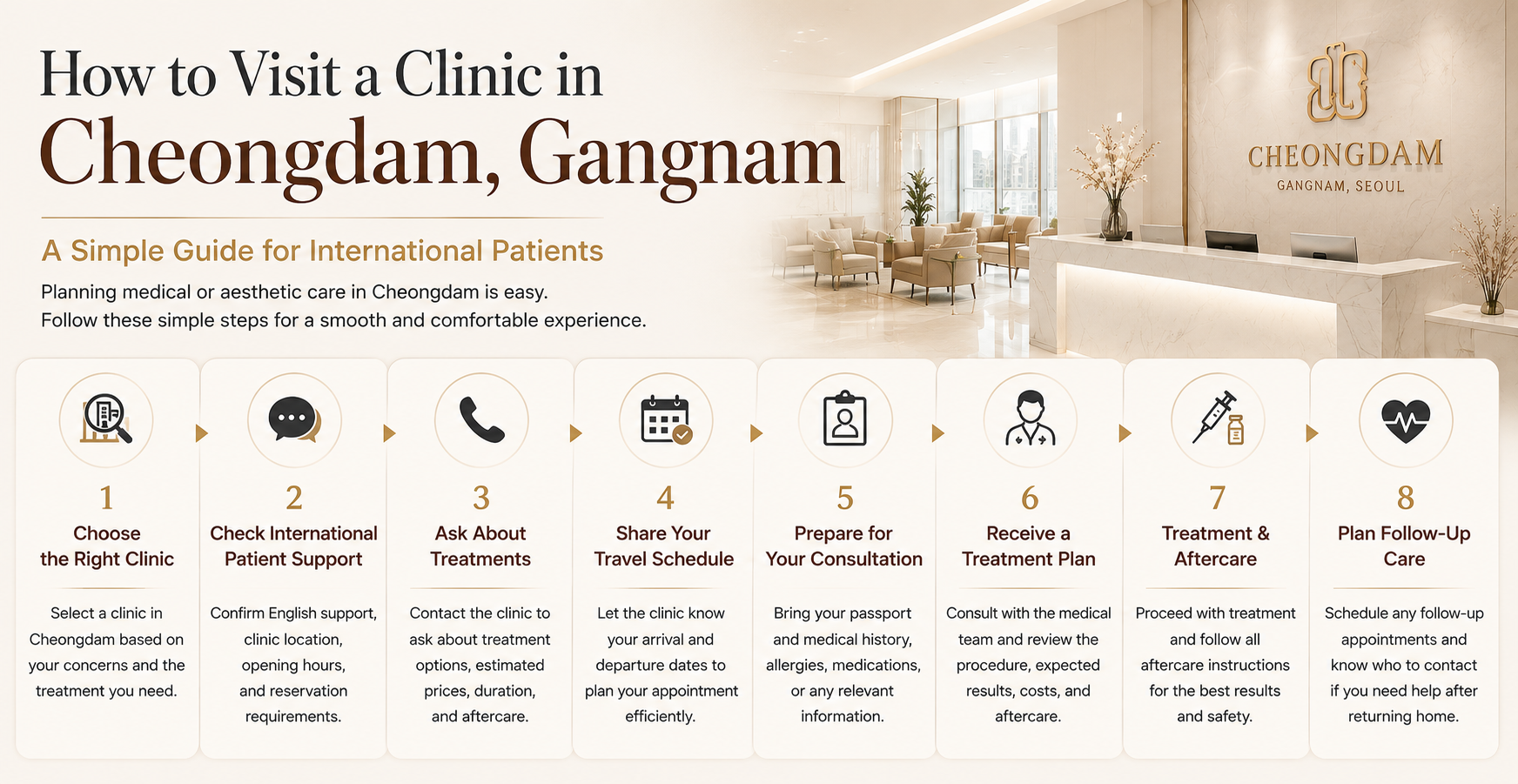
Foreign patients considering vaginal tightening in Cheongdam or Gangnam may wish to confirm whether English-language consultation is available and ask about the exact treatment offered, healthcare professional’s qualifications, devices used, expected results, potential risks, costs, recovery, and follow-up care.
Patients traveling to Korea specifically for a surgical procedure should also consider whether they will remain in Seoul long enough for appropriate postoperative follow-up.
Choosing a Vaginal Tightening Clinic in Seoul
When comparing clinics, patients should look beyond promotional terms, package prices, or promises of improved sexual performance.
Important considerations include the healthcare professional’s qualifications, the exact procedure or device being recommended, evidence supporting the treatment, informed-consent process, possible complications, and follow-up care.
Patients should receive enough information to understand both the potential benefits and limitations before deciding whether to proceed.
Frequently Asked Questions
What is vaginal tightening?
Vaginal tightening is a broad term used for surgical and nonsurgical procedures marketed to address vaginal laxity or change vaginal tissues. It does not refer to one standardized medical procedure.
Is vaginal tightening the same as vaginal rejuvenation?
Not exactly. “Vaginal rejuvenation” is a broad marketing term that can refer to several surgical and nonsurgical procedures, including some treatments marketed for vaginal tightening.
What causes vaginal laxity?
Perceived vaginal laxity may be associated with childbirth, pelvic floor changes, aging, or other factors. Because similar symptoms can have different causes, medical evaluation can help determine the appropriate treatment.
Are there nonsurgical vaginal tightening treatments?
Laser, radiofrequency, and other energy-based procedures are marketed as nonsurgical vaginal tightening treatments. Patients should discuss the evidence, intended use, limitations, and potential risks of a specific device with a qualified healthcare professional before treatment.
Does vaginal tightening improve sexual pleasure?
Improved sexual pleasure, orgasm, or satisfaction cannot be guaranteed. Sexual function is influenced by many physical, hormonal, psychological, and relationship factors.
Can pelvic floor exercises help?
Pelvic floor rehabilitation may help certain pelvic floor conditions, but it is not appropriate for every symptom. An evaluation can determine whether pelvic floor therapy should be considered.
What are the risks of surgical vaginal tightening?
Potential risks include pain, bleeding, infection, scarring, changes in sensation, painful intercourse, wound-healing problems, dissatisfaction with the outcome, and possible additional surgery.
Can foreigners receive vaginal tightening treatment in Korea?
International patients can seek consultation at Korean medical institutions offering women’s intimate health services. Available procedures, eligibility, pricing, English-language assistance, and follow-up arrangements vary between clinics.
Where can I get a vaginal tightening consultation in Cheongdam, Seoul?
Women concerned about vaginal laxity or other intimate health symptoms can consult qualified healthcare professionals in Cheongdam and the surrounding Gangnam area. A consultation should identify the underlying concern and explain appropriate treatment options, risks, alternatives, and expected outcomes.
Vaginal Tightening Consultation in Cheongdam, Seoul
Women considering vaginal tightening or intimate rejuvenation treatment should receive an individualized evaluation before choosing a surgical or nonsurgical procedure.
Patients searching for
Vaginal Tightening Cheongdam,
Vaginal Rejuvenation Seoul,
Intimate Wellness Clinic Korea,
Vaginal Tightening Gangnam, or
Vaginal Tightening for Foreigners in Seoul can consult a qualified healthcare professional about symptoms, available treatments, potential risks, alternatives, recovery, and follow-up care.