STD Test Cheongdam Seoul Clinic
Confidential STI Screening and Sexual Health Testing in Korea
STD and STI testing in Cheongdam, Seoul can help detect sexually transmitted infections that may cause few or no noticeable symptoms, including chlamydia, gonorrhea, syphilis, and HIV. Patients seeking confidential sexual health testing in Korea can consult a healthcare provider about appropriate blood, urine, or swab tests based on symptoms, sexual history, and possible exposure.
Confidential STD and STI Testing in Cheongdam, Seoul
Sexually transmitted infections, commonly called STDs or STIs, do not always cause noticeable symptoms. A person may feel completely healthy while still having an infection, which makes appropriate screening an important part of sexual health care.
Patients looking for STD testing in Cheongdam, Gangnam, or Seoul can consult a healthcare provider about which tests are appropriate based on symptoms, sexual history, previous infections, and potential exposure.
Depending on the infection and type of sexual contact, testing may involve blood tests, urine samples, genital swabs, throat swabs, or rectal swabs.
What STDs and STIs Can Be Tested?
Sexual health screening may include testing for common sexually transmitted infections such as:
- Chlamydia
- Gonorrhea
- Syphilis
- HIV
- Hepatitis B or C when indicated
- Trichomoniasis when indicated
- Genital herpes when clinically appropriate
There is no single test that detects every sexually transmitted infection. The appropriate tests depend on factors such as symptoms, age, anatomy, sexual history, and sites of possible exposure.
A healthcare provider can recommend an individualized STI screening plan rather than automatically performing the same test panel for every patient.
Can You Have an STD Without Symptoms?
Yes. Many sexually transmitted infections can occur without obvious symptoms.
Chlamydia, gonorrhea, HIV, and other infections may be present without immediately causing noticeable signs. Testing may therefore be appropriate even when you feel healthy, particularly after a possible exposure or when screening is recommended based on individual risk factors.
When Should I Get an STD Test?
STI testing may be considered after unprotected sexual contact, a new sexual partner, a possible exposure to an STI, or when a current or previous partner has been diagnosed with an infection.
Testing may also be appropriate if you experience symptoms such as unusual genital discharge, pain or burning during urination, genital sores, pelvic discomfort, testicular symptoms, unusual vaginal bleeding, or other unexplained genital symptoms.
Some people may also benefit from routine STI screening even when they have no symptoms.
How Are STD Tests Performed?
The testing method depends on the infection and the site of possible exposure.
Urine tests may be used to test for infections such as chlamydia and gonorrhea in appropriate circumstances.
Blood tests are commonly used for infections such as HIV and syphilis.
Genital swabs may be used for certain infections depending on symptoms and anatomy.
Throat or rectal swabs may be appropriate following oral or anal sexual exposure.
Testing the appropriate anatomical site is important because a urine or genital test alone may not identify an infection located in the throat or rectum.
How Soon After Sexual Exposure Should I Get Tested?
There is no single testing window that applies to every STI.
Different infections and different laboratory tests have different detection periods. Testing very soon after exposure may not reliably identify certain infections, which means repeat testing may sometimes be recommended.
A healthcare provider can recommend appropriate testing based on the infection of concern, date and type of exposure, symptoms, and type of laboratory test available.
If you develop symptoms or know that a sexual partner has been diagnosed with an STI, seek medical advice rather than waiting for a particular testing date.
Chlamydia and Gonorrhea Testing in Seoul
Chlamydia and gonorrhea are bacterial sexually transmitted infections that can occur without noticeable symptoms.
Testing commonly uses nucleic acid amplification tests with urine or swab specimens. Depending on sexual exposure, genital, throat, or rectal testing may be appropriate.
If an infection is detected, a healthcare provider can recommend treatment and advise whether follow-up testing or evaluation of sexual partners is necessary.
HIV Testing in Cheongdam, Seoul
HIV testing may be included as part of sexual health screening.
The appropriate test and timing depend partly on when a possible exposure occurred. Testing too soon after exposure may require follow-up testing because different HIV tests have different window periods.
If a potential HIV exposure occurred very recently, seek medical care promptly because post-exposure prophylaxis, or PEP, is time-sensitive.
Syphilis Testing
Syphilis is a bacterial sexually transmitted infection that progresses through different stages and may sometimes cause symptoms that are overlooked or mistaken for another condition.
Blood tests are commonly used for syphilis screening.
People with possible exposure, symptoms, or relevant risk factors can discuss appropriate testing and follow-up with a healthcare provider.
Do I Need a Full STD Panel?
Not necessarily.
“Full STD panel” does not have one universal medical definition. Different clinics may use the term for different combinations of laboratory tests, and no single standard panel automatically detects every sexually transmitted infection.
An individualized approach can help determine which infections and anatomical sites should be tested based on your symptoms and sexual exposure.
Before choosing an STD testing package, ask exactly which infections are included.
What Happens If My STD Test Is Positive?
Treatment and follow-up depend on the infection identified.
Bacterial infections such as chlamydia, gonorrhea, and syphilis can be treated with appropriate antibiotics, while viral infections require different approaches to treatment, monitoring, or long-term management.
A healthcare provider can explain your results, recommend treatment or additional testing, and discuss whether recent sexual partners should also receive testing or medical evaluation.
Confidential STD Testing in Cheongdam
Sexual health is private medical information, and patients may prefer discreet consultation and testing.
If confidentiality is particularly important, ask the medical institution how appointments, medical records, laboratory results, insurance claims, payment receipts, and result notifications are handled.
Specific administrative and privacy procedures can differ between clinics, so these details should be confirmed directly with the medical institution.
STD Testing for Foreigners in Seoul, Korea
Foreign residents, expatriates, international students, business travelers, and visitors can seek STI screening and sexual health care at medical institutions in Seoul.
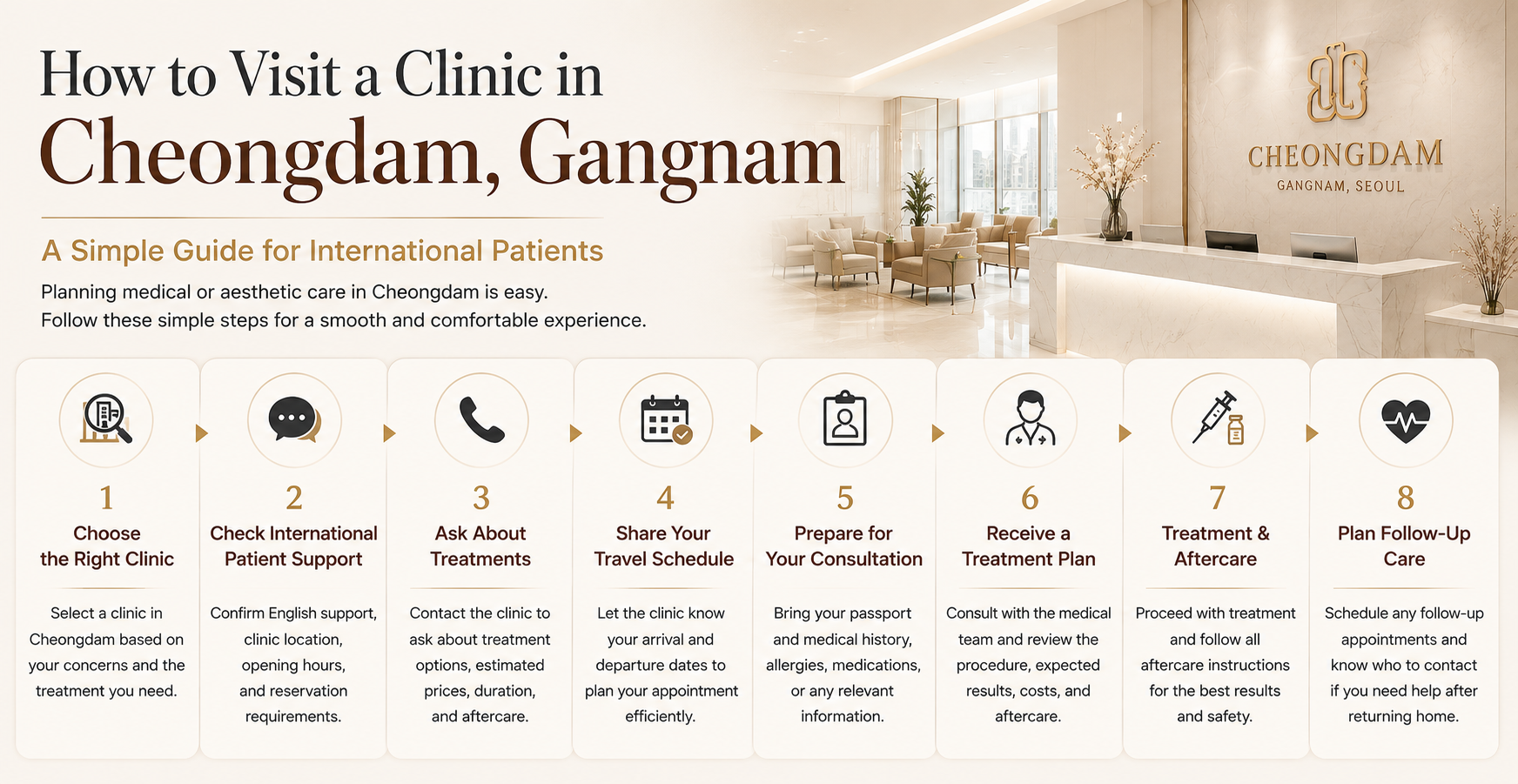
International patients looking for STD testing in Cheongdam or Gangnam may wish to confirm whether the clinic provides English-language consultation, which STI tests are available, expected result times, and whether treatment and follow-up consultations are available if a test is positive.
Bringing information about recent exposure, symptoms, medications, allergies, and previous STI diagnoses can help the healthcare provider select appropriate tests.
Sexual Health Care in Cheongdam, Seoul
Sexual health care can involve more than laboratory testing.
Depending on individual circumstances, a consultation may include STI screening, evaluation of symptoms, contraception counseling, HPV prevention, HIV testing, discussion of HIV PrEP or PEP, and recommendations for follow-up care.
The appropriate services depend on each patient's sexual history, symptoms, health status, and individual concerns.
Frequently Asked Questions
Where can I get an STD test in Cheongdam, Seoul?
Medical clinics in Cheongdam and the surrounding Gangnam area may provide STD and STI testing. Patients should confirm available tests, appointment requirements, result procedures, and language support directly with their chosen clinic.
Can I get an STD test without symptoms?
Yes. Many sexually transmitted infections can occur without symptoms, so screening may be appropriate even when you feel completely healthy.
What does an STD test include?
There is no universal STD panel. Depending on individual circumstances, screening may include tests for chlamydia, gonorrhea, syphilis, HIV, hepatitis, or other sexually transmitted infections.
Do STD tests require blood?
Some do, but others do not. HIV and syphilis commonly involve blood testing, while chlamydia and gonorrhea can often be tested using urine or swab samples.
Can I get throat or rectal STI testing?
Yes, these tests may be appropriate following oral or anal sexual exposure. A healthcare provider can recommend which anatomical sites should be tested.
Can foreigners get STD testing in Korea?
Yes. Foreign residents and visitors can seek STI testing at medical institutions in Korea. Available tests, prices, language assistance, appointment requirements, and result procedures vary by clinic.
How long do STD test results take?
The turnaround time depends on the infection being tested, laboratory method, and medical institution. Ask the clinic for the expected result time when arranging your test.
Is STD testing confidential?
Sexual health information is medical information, but administrative procedures vary between healthcare institutions. Patients with specific confidentiality concerns should ask about medical records, insurance documentation, payment, and result-delivery procedures before testing.
STD and STI Testing Consultation in Cheongdam, Seoul
Whether you are concerned about a recent sexual exposure, experiencing symptoms, beginning a new relationship, or simply want to check your sexual health, appropriate STI screening can help identify infections that might otherwise go unnoticed.
Patients searching for
STD Test Cheongdam,
STI Testing Cheongdam,
STD Clinic Seoul,
Confidential STD Testing Korea,
Sexual Health Clinic Gangnam, or
STD Testing for Foreigners in Seoul can consult a qualified healthcare provider about appropriate testing, interpretation of results, treatment, and follow-up care.