Menopause Cheongdam Seoul Clinic
Women’s Hormone Health and Menopause Care in Korea
Menopause care in Cheongdam, Seoul helps women manage symptoms such as hot flashes, night sweats, sleep changes, vaginal dryness, and menstrual changes through individualized medical evaluation and treatment. Women seeking menopause treatment in Korea can consult a healthcare provider about hormone therapy, non-hormonal treatments, bone health, sexual health, and long-term women’s health based on their symptoms and medical history.
Menopause Care in Cheongdam, Seoul
Menopause is a natural stage of life, but hormonal changes during perimenopause and menopause can affect sleep, menstrual cycles, sexual health, mood, bone health, and overall quality of life.
Women experiencing menopause symptoms in Seoul can receive an individualized medical evaluation to better understand their symptoms and available treatment options.
A menopause consultation may include a review of menstrual history, current symptoms, medications, previous treatments, personal and family medical history, and other health factors that may influence treatment decisions.
What Is Menopause?
Menopause is the stage when menstrual periods permanently stop. It is generally confirmed after 12 consecutive months without a menstrual period when there is no other medical explanation.
The transition leading up to menopause is known as perimenopause. During this period, hormone levels fluctuate and menstrual cycles may become irregular.
Some women experience few symptoms, while others develop symptoms that significantly affect sleep, work, relationships, sexual health, and daily activities.
What Are the Common Symptoms of Menopause?
Menopause and perimenopause can cause a wide range of symptoms.
Common symptoms may include:
- Hot flashes
- Night sweats
- Irregular menstrual periods
- Sleep difficulties
- Vaginal dryness
- Discomfort during sex
- Urinary changes
- Mood changes
- Difficulty concentrating
The type, severity, and duration of symptoms vary between individuals. Some symptoms can also be caused by conditions unrelated to menopause, so medical evaluation may be appropriate when symptoms are persistent or concerning.
When Should I Visit a Menopause Clinic?
Consider a women’s health consultation when menopause or perimenopause symptoms begin interfering with your sleep, work, relationships, sexual health, or daily life.
Medical evaluation is also important if you experience unusual or heavy vaginal bleeding, pelvic symptoms, or bleeding after menopause.
Your healthcare provider can assess whether symptoms are related to menopause or whether additional evaluation is necessary.
Hormone Replacement Therapy in Cheongdam, Seoul
Menopausal hormone therapy, commonly called HRT or hormone replacement therapy, may help relieve certain menopause symptoms.
Systemic hormone therapy can be particularly effective for hot flashes and night sweats. Local vaginal estrogen may also be considered for some women experiencing vaginal dryness and other genitourinary symptoms associated with menopause.
However, hormone therapy is not appropriate for everyone.
The decision to use HRT should be individualized according to symptoms, age, time since menopause, personal and family medical history, and potential benefits and risks.
Is Hormone Therapy Safe?
The safety and suitability of hormone therapy depend on the individual patient.
Before prescribing menopausal hormone therapy, a healthcare provider should review relevant medical history and risk factors.
Certain medical conditions may affect whether systemic hormone therapy is appropriate, including a history of some hormone-sensitive cancers, blood clots, stroke, heart disease, liver disease, or unexplained vaginal bleeding.
Patients should discuss the potential benefits, risks, type of hormone therapy, dose, and route of administration with a qualified healthcare provider.
Are There Non-Hormonal Treatments for Menopause?
Yes. Hormone therapy is not the only treatment option for menopause symptoms.
Depending on the symptoms and individual health history, non-hormonal medications or other treatments may be considered.
Lifestyle measures such as regular physical activity, healthy sleep habits, balanced nutrition, smoking cessation, and maintaining overall cardiovascular and bone health can also play an important role during and after menopause.
Treatment should be based on the symptoms and health priorities of each individual rather than using the same approach for every patient.
Vaginal Dryness and Sexual Health During Menopause
Lower estrogen levels during menopause can affect vaginal and urinary tissues.
Women may experience vaginal dryness, irritation, discomfort during sexual activity, urinary urgency, or other genitourinary symptoms.
These concerns are common and can be discussed confidentially during a women’s health or menopause consultation.
Treatment options may include vaginal moisturizers, lubricants, local hormonal therapy, or other medical treatments depending on individual symptoms and health considerations.
Menopause and Bone Health
Hormonal changes around menopause can contribute to increased bone loss and may increase the long-term risk of osteoporosis and fractures.
A menopause consultation can include a review of osteoporosis risk factors and discussion of exercise, nutrition, calcium and vitamin D, and whether bone density testing may be appropriate.
Bone health recommendations should be individualized according to age, medical history, family history, and other risk factors.
Menopause and Long-Term Women’s Health
Menopause care involves more than managing hot flashes or checking hormone levels.
This stage of life provides an opportunity to review overall health, including cardiovascular risk, bone health, breast and cervical screening, sexual health, sleep, nutrition, physical activity, and other preventive healthcare needs.
Regular women’s health care can help identify health concerns and develop an individualized plan for healthy aging.
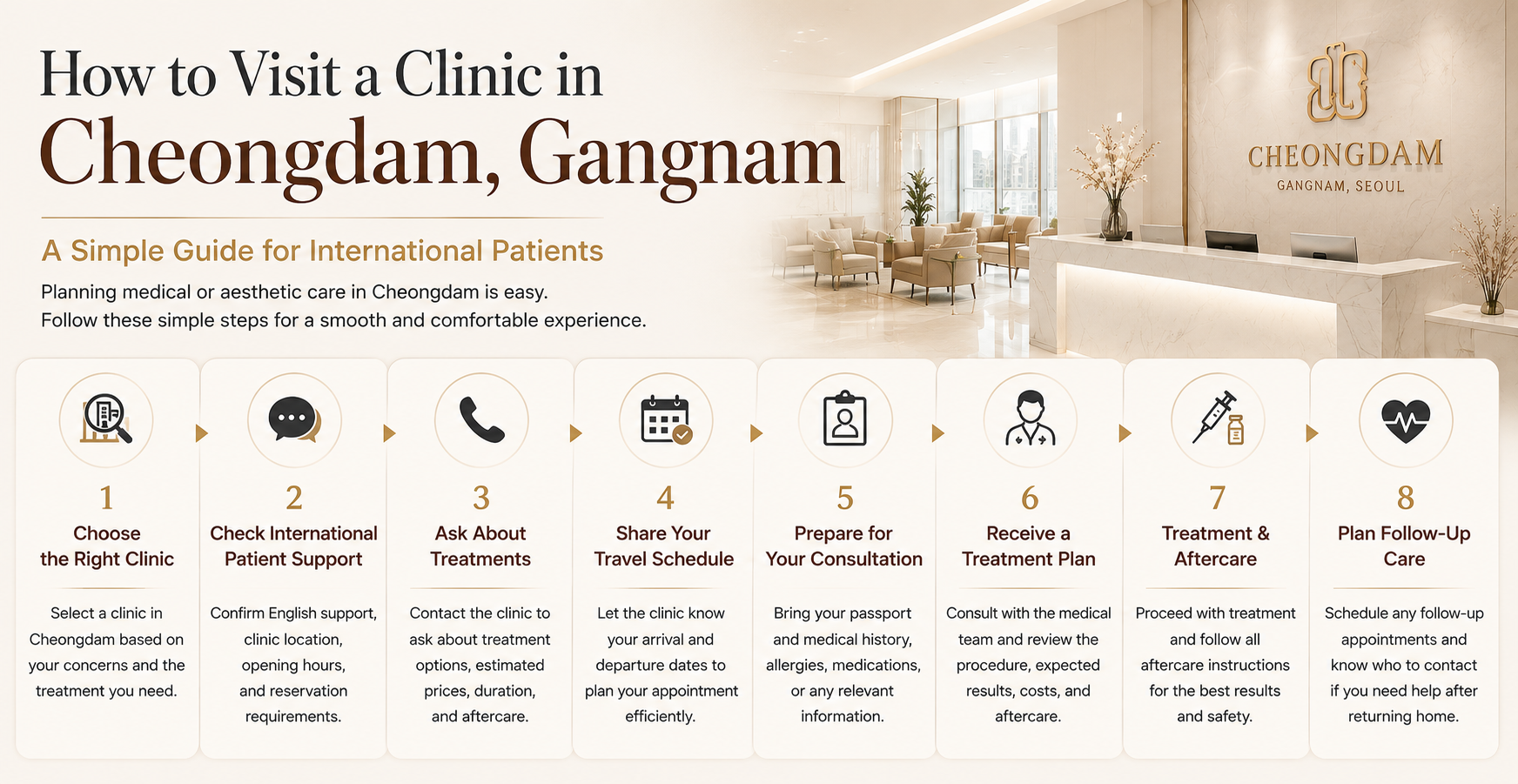
Menopause Care for Foreigners in Seoul, Korea
International residents, expatriates, and visitors living in Seoul may seek menopause and women’s hormone health services at gynecology and women’s health clinics.
Patients looking for menopause care in Cheongdam or Gangnam may wish to confirm whether the clinic provides English-language consultation, menopause evaluation, hormone therapy, and ongoing women’s health care.
Bringing information about current medications, menstrual history, previous hormone therapy, medical conditions, and recent screening results can also help during the consultation.
Frequently Asked Questions
What is the difference between perimenopause and menopause?
Perimenopause is the transition before menopause when hormone levels and menstrual cycles begin changing. Menopause is generally confirmed after 12 consecutive months without menstruation when there is no other medical cause.
What are common signs of menopause?
Common menopause symptoms include hot flashes, night sweats, menstrual changes, sleep difficulties, vaginal dryness, and changes in mood or concentration. Symptoms vary significantly between individuals.
Is HRT available for menopause symptoms?
Hormone replacement therapy may be considered for certain menopause symptoms when medically appropriate. The potential benefits and risks should be assessed according to the individual patient’s symptoms, age, medical history, and other risk factors.
Do I need hormone testing for menopause?
Not every woman requires hormone testing to evaluate menopause or perimenopause. A healthcare provider can determine whether testing is necessary based on age, symptoms, menstrual history, and individual circumstances.
Can menopause affect bone health?
Yes. Hormonal changes around menopause can contribute to accelerated bone loss and an increased risk of osteoporosis. A healthcare provider can assess individual risk factors and determine whether bone density testing or other preventive measures should be considered.
Can menopause cause vaginal dryness?
Yes. Reduced estrogen levels can contribute to vaginal dryness, irritation, discomfort during sex, and urinary symptoms. Several hormonal and non-hormonal treatment options may be available depending on individual circumstances.
Where can I get menopause treatment in Cheongdam, Seoul?
Women experiencing perimenopause or menopause symptoms can consult gynecology or women’s health clinics in Cheongdam and the surrounding Gangnam area. International patients should confirm the clinic’s menopause services, appointment requirements, and availability of English-language consultation before visiting.
Menopause and Women’s Hormone Health Consultation in Cheongdam
Women experiencing symptoms of perimenopause or menopause can receive individualized evaluation based on their symptoms, medical history, lifestyle, and treatment goals.
Patients searching for
menopause treatment in Cheongdam,
menopause clinic Seoul,
HRT in Seoul,
women’s hormone health Korea, or
menopause care for foreigners in Korea can consult a qualified healthcare provider about appropriate symptom management and long-term women’s health care.