Rosacea Treatment in Cheongdam
Rosacea Treatment in Cheongdam
Rosacea is a chronic inflammatory skin condition that commonly affects the face. It can cause persistent redness, flushing, visible small blood vessels, burning or stinging, and acne-like bumps. Some people also develop eye symptoms or thickening of the skin. Because rosacea can present differently from one person to another, treatment is usually tailored to the specific signs and symptoms rather than based on one standard procedure.
For international patients researching rosacea treatment in Cheongdam, Seoul, treatment may include prescription medication, gentle skincare, trigger management, laser or light-based procedures, or combinations of these approaches. The goal is generally to control symptoms, reduce flare-ups, and improve the appearance and comfort of the skin rather than permanently cure the condition.
What Is Rosacea?
Rosacea is a long-term inflammatory skin disorder that most often affects the central face. It can cause symptoms that come and go, with periods of improvement followed by flare-ups.
Common signs include:
- Persistent facial redness
- Frequent flushing
- Visible small blood vessels
- Burning or stinging
- Acne-like bumps or pustules
- Dry or sensitive skin
- Eye irritation or redness
- Thickening of facial skin in some cases
Rosacea does not look exactly the same in every patient. Different signs may appear together or at different times, which is why modern treatment approaches focus on individual symptoms and characteristics.
How Is Rosacea Diagnosed?
There is no single laboratory test that confirms rosacea. A dermatologist generally diagnoses it by examining the skin and, when relevant, the eyes. Medical history and the pattern of symptoms are also important because rosacea can fluctuate over time. In some cases, additional testing may be needed to rule out another condition that resembles rosacea.
This is particularly important for international patients who may have previously been told they have sensitive skin, acne, or another condition without receiving a formal diagnosis.
Common Rosacea Treatments in Cheongdam
Cheongdam dermatology providers may offer medical and aesthetic approaches to rosacea management. The treatment selected should depend on the patient's symptoms, skin characteristics, medical history, and previous treatment response.
Prescription Treatments
Medication can be used to target specific rosacea symptoms. Depending on the presentation, dermatologists may prescribe topical treatments for persistent redness or inflammatory bumps, or oral medication when appropriate.
For example, topical azelaic acid, ivermectin, and metronidazole are among treatments used for inflammatory acne-like rosacea symptoms. Certain prescription medications can also temporarily reduce persistent facial redness by narrowing superficial blood vessels.
Medication should be selected and used under medical supervision. A treatment that is appropriate for one rosacea pattern may not be suitable for another.
Laser Treatment
Laser therapy may be considered when visible blood vessels or persistent redness are prominent. Certain vascular lasers can target superficial blood vessels and reduce their appearance.
Laser treatment can be useful for selected patients, but it is not necessarily the only component of rosacea management. Skin sensitivity, redness triggers, medication, and ongoing inflammation may still need to be addressed.
Treatment response varies, and more than one session may be required. Temporary redness, swelling, bruising, or other reactions can occur.
Intense Pulsed Light
Intense pulsed light, commonly called IPL, is another light-based option that may be considered for selected rosacea symptoms. It can help reduce flushing and improve some aspects of skin appearance. Compared with certain laser treatments, IPL may require more treatment sessions.
IPL is not appropriate for every patient. Skin tone, pigmentation risk, medications, and the type of redness should be considered before treatment.
Gentle Skincare and Skin Barrier Support
Skincare is an important part of rosacea management. Dermatologists commonly recommend gentle cleansing, moisturizing, and sun protection because irritated skin can be more susceptible to flare-ups.
Patients may need to avoid harsh exfoliation, aggressive scrubbing, or skincare products that cause burning or irritation. The best routine depends on individual skin sensitivity.
Trigger Management
Rosacea flare-ups can be associated with different triggers. Common examples include overheating, alcohol, spicy foods, and sun exposure, although individual triggers vary.
Keeping track of when symptoms worsen can help patients and dermatologists identify personal triggers. Avoiding known triggers can complement medical treatment and may help maintain improvement.
Which Rosacea Treatment May Be Right for You?
There is no universally best rosacea treatment. A treatment plan may be selected according to the dominant symptoms.
For example:
- Persistent redness: prescription treatments, laser, or light therapy may be considered.
- Visible blood vessels: vascular laser or other light-based procedures may be options.
- Acne-like bumps: topical or oral medical treatment may be appropriate.
- Sensitive or irritated skin: gentle skincare and barrier support are important.
- Eye symptoms: dermatological and, when necessary, ophthalmic evaluation may be required.
Combination treatment is sometimes appropriate because patients can experience several rosacea features at the same time.
Treatment Process and Downtime
A consultation is usually the starting point. The dermatologist may review symptom history, triggers, medications, previous procedures, and skincare products before recommending treatment.
Downtime depends on the treatment. Prescription skincare may have little or no procedural downtime, while laser or light procedures can temporarily cause redness, swelling, sensitivity, or bruising.
International patients should consider recovery time when planning a Seoul itinerary. It may be preferable to schedule a treatment before lighter activities rather than immediately before extensive sightseeing or outdoor exposure.
Results and Maintenance
Rosacea is generally considered a chronic condition, and there is currently no permanent cure. Treatment can help control symptoms and reduce flare-ups, but ongoing management may be necessary.
Laser or light treatments may improve visible blood vessels and some forms of persistent redness, but new vessels can develop over time. Maintenance treatment may therefore be considered depending on the individual's condition.
A long-term plan may combine medical treatment, gentle skincare, sun protection, and trigger management.
Risks and Limitations
Rosacea treatments are not completely risk-free. Medication can cause side effects, while laser and light treatments may cause temporary redness, swelling, bruising, pigment changes, burns, or, less commonly, scarring.
The American Academy of Dermatology notes that inexperienced use of laser, light treatments, or electrodesiccation can result in burns, permanent skin-color changes, or scars.
Patients with darker skin tones should discuss pigmentation risks carefully before energy-based treatment. Previous reactions to lasers, medications, or skincare products should also be disclosed during consultation.
Cost Factors for Rosacea Treatment in Cheongdam
There is no universal price for rosacea treatment in Cheongdam. Costs depend on the treatment selected, treatment area, number of sessions, technology used, medication, provider, and whether multiple approaches are combined.
For international patients, the overall budget may also include consultation, medication, follow-up care, transportation, accommodation, and additional visits.
Before booking, ask whether the quoted price includes consultation, treatment, medication, aftercare, and follow-up. If laser or IPL is recommended, ask how many sessions may reasonably be considered rather than comparing only the cost of a single session.
Why Consider Cheongdam?
Cheongdam is part of Seoul's established dermatology and aesthetic-treatment landscape and can be considered by international visitors seeking professional care for skin conditions such as rosacea.
However, location alone should not determine your choice. The quality of the medical assessment, experience with rosacea, appropriate treatment selection, communication, safety practices, and follow-up arrangements are more important considerations.
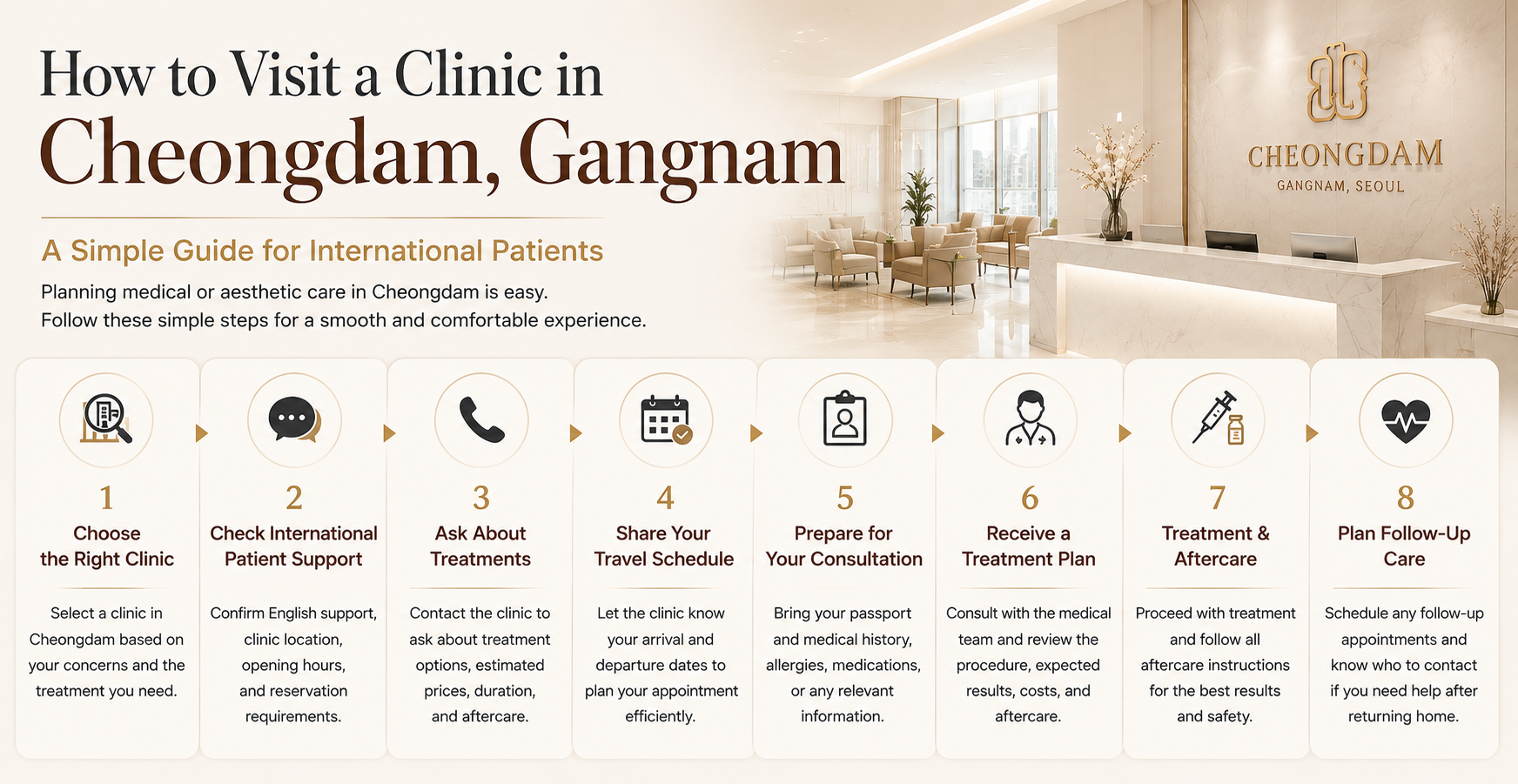
Tips for International Patients
If you are planning rosacea treatment in Cheongdam during a trip to Seoul:
- Arrange an assessment first: Do not assume facial redness is automatically rosacea.
- Explain your symptoms: Mention flushing, burning, bumps, visible vessels, or eye symptoms.
- Identify triggers: Tell the provider what seems to make your symptoms worse.
- Share your treatment history: Include previous medications, lasers, peels, and skincare products.
- Ask about downtime: Energy-based procedures may temporarily increase redness.
- Discuss pigmentation risk: This is particularly important before laser or light treatment.
- Plan follow-up: Ask how ongoing management will work after returning home.
Conclusion
Rosacea treatment in Cheongdam may involve prescription medication, gentle skincare, trigger management, laser therapy, IPL, or carefully selected combinations. Because rosacea can involve different symptoms and levels of severity, treatment should be individualized rather than based on a single popular procedure.
For international patients, a professional dermatology consultation is the most useful starting point. Understanding the diagnosis, treatment goals, potential side effects, recovery requirements, and long-term maintenance can help you make a more informed decision when seeking rosacea care in Seoul.
FAQs
Can rosacea be cured permanently?
There is currently no cure for rosacea, but treatment can help control symptoms, reduce flare-ups, and manage its different clinical features.
What is the best treatment for rosacea?
There is no single best treatment. The appropriate option depends on whether the main symptoms involve persistent redness, visible blood vessels, inflammatory bumps, flushing, or eye symptoms.
Can laser treatment help rosacea?
Yes. Certain laser treatments can reduce visible blood vessels and may improve persistent redness in selected patients. Several sessions may sometimes be needed.
Is IPL effective for rosacea?
IPL may help reduce flushing and some forms of facial redness. It is not suitable for everyone, so skin characteristics and the type of rosacea should be assessed before treatment.
How many rosacea treatments will I need?
The number of treatments depends on the symptoms and treatment type. Medication may require ongoing use, while laser or IPL treatments may be performed as a series.
Can skincare help control rosacea?
Yes. Gentle cleansing, moisturizing, sun protection, and avoidance of personal triggers are important parts of rosacea management.
Can rosacea cause eye problems?
Yes. Rosacea can affect the eyes and may cause symptoms such as redness, dryness, irritation, or swollen eyelids. Eye symptoms should be discussed with a medical professional because significant ocular involvement may require ophthalmic care.
Is rosacea treatment in Cheongdam suitable for international patients?
International patients can seek dermatology care in Cheongdam, but they should allow enough time for consultation, treatment, recovery, and follow-up. Rosacea often requires ongoing management rather than a single procedure.