Plastic Surgery Consultation in Cheongdam
Plastic Surgery Consultation in Cheongdam
A plastic surgery consultation in Cheongdam is an important step for anyone considering cosmetic or reconstructive surgery in Seoul. Whether you are researching rhinoplasty, eyelid surgery, facial contouring, facelift surgery, breast procedures, or body contouring, the consultation is where your goals, anatomy, medical history, treatment options, and expected recovery should be discussed.
For international patients, consultation is even more important because traveling to another country adds practical considerations such as language, medical records, follow-up care, recovery time, and returning home safely.
Cheongdam is part of Seoul's Gangnam District and is home to numerous plastic surgery and aesthetic medical providers. Medical Korea's official listings include plastic surgery institutions in the Cheongdam and Gangnam areas, including providers with international-patient services and interpretation support.
What Happens During a Plastic Surgery Consultation?
A consultation is more than simply discussing the procedure you want.
The surgeon should evaluate your individual anatomy and determine whether the requested procedure is appropriate for your goals. The discussion may include your medical history, previous procedures, medications, allergies, lifestyle factors, and expectations.
The consultation may also cover:
- Your primary aesthetic concern
- Relevant facial or body anatomy
- Previous surgeries or treatments
- Medical conditions
- Current medications and supplements
- Smoking or nicotine use
- Allergies
- Previous anesthesia experiences
- Expected results
- Possible alternatives
- Recovery requirements
- Potential complications
- Costs and what is included
The goal should be a shared decision-making process rather than simply selecting a procedure from a menu. The American Society of Plastic Surgeons describes informed consent as a process in which the patient and surgeon discuss the nature of treatment, expected benefits, risks, alternatives, and anticipated outcomes before surgery.
Why Consultation Matters Before Plastic Surgery
Two people can request the same operation but require completely different treatment plans.
For example, someone interested in rhinoplasty may primarily need changes to the nasal bridge, while another patient may be more concerned about the tip, breathing function, or previous surgical changes.
Similarly, someone asking about a facelift may actually have concerns involving the neck, skin laxity, facial volume, or loss of structural support.
A consultation helps separate the desired result from the procedure used to achieve it.
This is particularly important because no surgical technique is appropriate for every patient.
What Should Be Discussed During a Cheongdam Consultation?
Your Goals
Start by explaining what you would like to change rather than focusing only on the name of a procedure.
For example, instead of saying you want a particular type of facelift, you might explain that you are concerned about lower-face laxity, jowling, or a less defined jawline.
This allows the surgeon to assess which treatment options may address the underlying concern.
Your Medical History
Be honest about your health history.
Important information may include previous operations, chronic medical conditions, allergies, medications, supplements, bleeding problems, anesthesia reactions, and previous complications.
If you have undergone plastic surgery previously, bring details of the procedure when available.
Previous Treatments
Previous fillers, threads, implants, lasers, injectables, or surgeries may affect treatment planning.
For example, previous nasal surgery can change the anatomy relevant to revision rhinoplasty. Previous facial procedures may also affect tissue planes and surgical planning.
How Is the Treatment Plan Developed?
A treatment plan should be based on the patient's anatomy and goals rather than simply selecting the most popular procedure.
Depending on the operation, the surgeon may evaluate:
- Facial proportions
- Skin quality
- Tissue thickness
- Muscle activity
- Bone structure
- Fat distribution
- Degree of skin laxity
- Existing asymmetry
- Previous surgical changes
- Functional concerns
Photography or imaging may be used to document the current condition and assist with planning.
However, digital simulations should be viewed as planning tools rather than guarantees of the final surgical result.
Questions to Ask a Plastic Surgeon
Patients should feel comfortable asking detailed questions during consultation.
Useful questions include:
- What procedure do you recommend for my concern?
- Why is this procedure appropriate for my anatomy?
- Are there alternatives?
- What are the main risks?
- What complications are most relevant to my situation?
- What type of anesthesia will be used?
- How long does the procedure usually take?
- Where will the surgery be performed?
- What should I expect during recovery?
- When can I return to exercise?
- How many follow-up appointments will I need?
- What happens if I experience a complication?
- Could I require revision surgery?
- What costs are included in the quotation?
A good consultation should leave you with a clear understanding of both the potential benefits and limitations of the procedure.
Consultation for International Patients
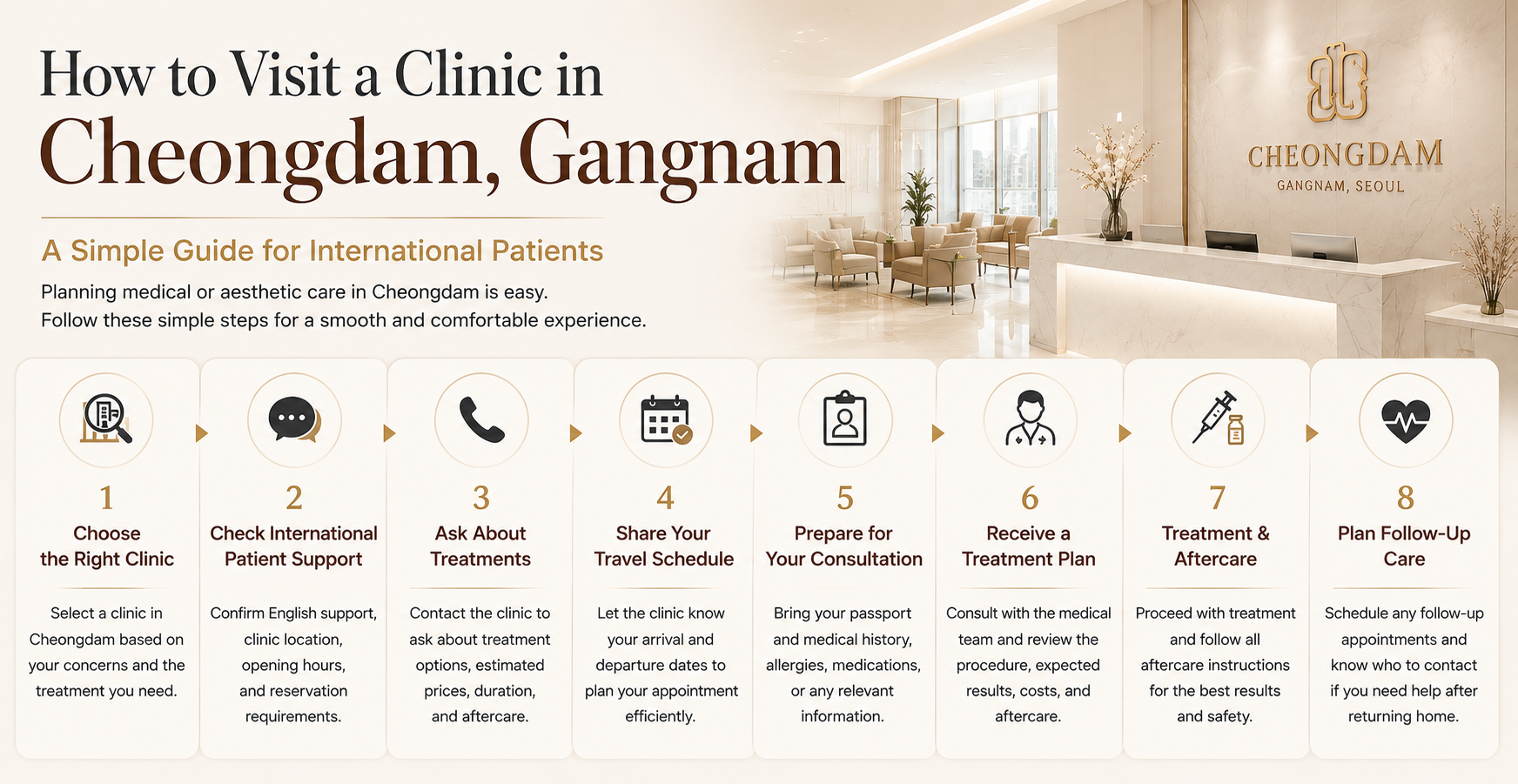
International patients should approach consultation as part of their medical-trip planning.
Medical Korea provides information and support for foreign patients, including information about medical institutions, medical-service reservations, interpretation-related assistance, and guidance concerning medical complaints.
Some registered Korean medical institutions also provide dedicated international healthcare centers, interpretation, pre- and postoperative care, and other services for foreign patients.
However, services differ between providers. Patients should confirm what is actually available before traveling.
Language and Interpretation
If you are not comfortable discussing medical information in Korean, ask whether professional interpretation is available.
Medical terminology can be difficult to communicate accurately through casual translation, particularly when discussing risks, anesthesia, medications, or postoperative instructions.
Medical Records
Bring relevant medical records whenever possible.
Depending on the surgery, this could include previous operative reports, imaging, medication lists, allergy information, or details about previous complications.
If you have had surgery elsewhere, knowing exactly what was previously done can be particularly important for revision procedures.
Consultation Before Surgery
Some international patients may have an online consultation before traveling and then receive an in-person assessment in Seoul.
An online consultation can help with preliminary planning, but it should not necessarily replace an appropriate physical examination before surgery.
The final treatment plan may change after the surgeon evaluates the patient in person.
Consultation vs Booking a Procedure
A consultation should not feel like a commitment to surgery.
Patients can use the consultation to understand whether the procedure is appropriate, compare alternatives, evaluate communication, and determine whether the expected recovery fits their schedule.
For international patients especially, it can be useful to compare more than one qualified provider when the procedure is significant or irreversible.
The cheapest consultation or surgery is not necessarily the best choice, and a higher quoted price does not automatically indicate better medical care.
Understanding Risks and Informed Consent
Every surgical procedure has potential risks.
The specific risks depend on the operation, anesthesia, patient's health, surgical technique, and other factors.
Possible complications across plastic surgery can include bleeding, infection, scarring, asymmetry, changes in sensation, wound-healing problems, contour irregularities, anesthesia-related complications, and the possibility of revision surgery.
The informed-consent discussion should cover relevant risks, expected benefits, alternatives, and potential outcomes before treatment.
Patients should be cautious of consultations that focus exclusively on idealized results without discussing limitations or complications.
How Much Does a Plastic Surgery Consultation Cost in Cheongdam?
Consultation fees vary between providers and procedures.
Some clinics may offer consultations as part of a surgical booking process, while others may charge separately. Additional assessments, imaging, laboratory testing, or specialist consultations may also affect the total cost.
For international patients, it is useful to clarify:
- Consultation fee
- Whether an examination is included
- Imaging or testing costs
- Interpretation fees
- Surgical quotation
- Anesthesia costs
- Facility charges
- Medication
- Postoperative appointments
Always confirm the current fee directly with the provider because pricing and included services can change.
Preparing for a Plastic Surgery Consultation
Good preparation can make the consultation more productive.
Before visiting a clinic in Cheongdam, consider preparing:
- A clear description of your goals
- A list of current medications
- Allergy information
- Relevant medical history
- Previous surgical records
- Details of previous aesthetic treatments
- Questions about risks and recovery
- Your intended travel dates
- Your preferred surgery timeframe
Reference photographs can sometimes help communicate the type of aesthetic change you have in mind, but they should not be treated as a promise that the same result can be reproduced.
What to Consider Before Booking Surgery
After the consultation, take time to review the information.
Consider whether:
- The proposed procedure matches your actual concern
- The surgeon explained alternatives
- The risks were clearly discussed
- You understand the recovery period
- You have realistic expectations
- Communication is comfortable
- Follow-up arrangements are clear
- The total cost is understandable
- The surgery location and anesthesia arrangements are appropriate
For international patients, also consider whether you have enough time in Seoul for postoperative monitoring before flying home.
Conclusion
A plastic surgery consultation in Cheongdam should be viewed as a medical decision-making process, not simply a sales appointment.
The most useful consultation explains what can realistically be changed, which procedures may be appropriate, what alternatives exist, what risks should be considered, and what recovery will involve.
For international patients traveling to Seoul, consultation also provides an opportunity to discuss language support, medical records, follow-up care, scheduling, and return-home planning.
Cheongdam offers access to a broad range of plastic surgery services, but patients should focus on the quality of the medical evaluation, communication, safety arrangements, and suitability of the treatment rather than choosing a provider based on location or promotional claims alone.
FAQs About Plastic Surgery Consultation in Cheongdam
What happens during a plastic surgery consultation?
A consultation usually involves discussing your goals, medical history, anatomy, previous procedures, treatment options, expected results, risks, recovery, and costs.
Do I need an in-person consultation before surgery?
For many surgical procedures, an in-person assessment is important because the surgeon needs to evaluate your anatomy and overall suitability. An online consultation may help with preliminary planning but may not replace an in-person evaluation.
Can foreigners have plastic surgery consultations in Cheongdam?
Yes. Some Korean medical institutions provide international-patient services such as interpretation and dedicated healthcare coordination. Availability varies by provider.
Should I bring my medical records?
Yes. Relevant surgical records, medication information, allergies, imaging, and previous treatment details can help the surgeon develop an appropriate plan.
Should I get more than one consultation?
For significant or irreversible surgery, comparing consultations from appropriately qualified providers can help you understand different approaches and make a more informed decision.
Can I book surgery immediately after consultation?
Sometimes, but there is no need to rush. Patients should make sure they understand the proposed procedure, risks, recovery, costs, and follow-up requirements before consenting.
What questions should I ask during consultation?
Ask about the recommended procedure, alternatives, risks, anesthesia, recovery, follow-up, revision possibilities, total costs, and what happens if complications occur.
How much does a consultation cost in Cheongdam?
Consultation fees vary by provider and procedure. Some may charge separately, while others may include consultation within a treatment process. Confirm current fees directly with the provider.
Is a consultation enough to guarantee the final result?
No. A consultation can establish realistic expectations and a treatment plan, but surgical outcomes vary between patients and cannot be guaranteed.