Why Do Foreigners Travel to Korea for Skin Treatments?
Why Do Foreigners Travel to Korea for Skin Treatments?
South Korea has become a popular destination for people seeking professional skin treatments, particularly in Seoul. Visitors from different countries travel to Korea for procedures ranging from laser treatments and skin boosters to acne care, pigmentation management, and non-surgical rejuvenation.
But why travel internationally for a skin treatment that may also be available at home?
For many visitors, the attraction is not simply one procedure or a promise of lower prices. Korea offers a combination of a highly developed beauty culture, a wide range of aesthetic treatments, concentrated clinic options, and the opportunity to combine medical care with a Seoul trip. For international patients, however, choosing a provider carefully remains more important than choosing a destination based on reputation alone.
Why Is Korea Popular for Skin Treatments?
South Korea has a strong cultural focus on skincare and aesthetic medicine. This has contributed to a large market for professional skin treatments, particularly in Seoul.
International visitors may encounter clinics offering a broad selection of procedures in one area, making it easier to research different approaches to common concerns such as uneven skin tone, acne scars, fine lines, texture, and signs of skin aging.
Areas such as Cheongdam are particularly relevant to visitors researching premium dermatology and aesthetic services. However, the concentration of clinics should not be interpreted as evidence that every provider offers the same level of care.
The specific practitioner, treatment plan, equipment, products, and patient assessment all matter.
What Skin Treatments Do Foreigners Get in Korea?
The exact options available depend on the clinic and the patient's needs. Common categories include:
- Laser and light-based treatments
- Treatments for pigmentation and uneven skin tone
- Acne and acne-scar treatments
- Skin boosters
- Collagen-stimulating treatments
- Injectable treatments
- Radiofrequency skin tightening
- Ultrasound-based skin tightening
- Facial rejuvenation procedures
- Treatments designed to improve skin texture and hydration
Some procedures focus primarily on skin quality, while others target pigmentation, acne, laxity, or facial volume.
A consultation is important because similar-looking concerns can have different underlying causes. A treatment that works well for one person may be inappropriate or unnecessary for another.
Access to a Wide Range of Treatments
One reason medical tourists consider Korea is the variety of aesthetic treatments available within Seoul's specialized medical and beauty districts.
For someone researching several options, this can make Korea attractive. Instead of focusing on one procedure immediately, an international patient can research different treatment categories and discuss which approach best matches their goals.
For example, someone concerned about early skin laxity might research energy-based tightening treatments, while another person primarily concerned with pigmentation may need a different treatment strategy.
The important distinction is between having many treatment options available and needing many treatments. More procedures do not automatically mean better results.
Korea's Focus on Skin Quality
Korean aesthetic medicine is often associated with treatments that emphasize skin quality and gradual cosmetic improvement.
Depending on the individual's situation, treatment plans may address factors such as hydration, texture, pigmentation, collagen production, or mild signs of aging.
This can appeal to international patients who are interested in non-surgical approaches. However, non-surgical treatments also have limitations. They cannot reproduce every result achievable through surgery, and no cosmetic procedure can guarantee a particular outcome.
Patients should have realistic expectations about what a treatment can and cannot change.
Why Seoul Is Attractive for Medical Tourists
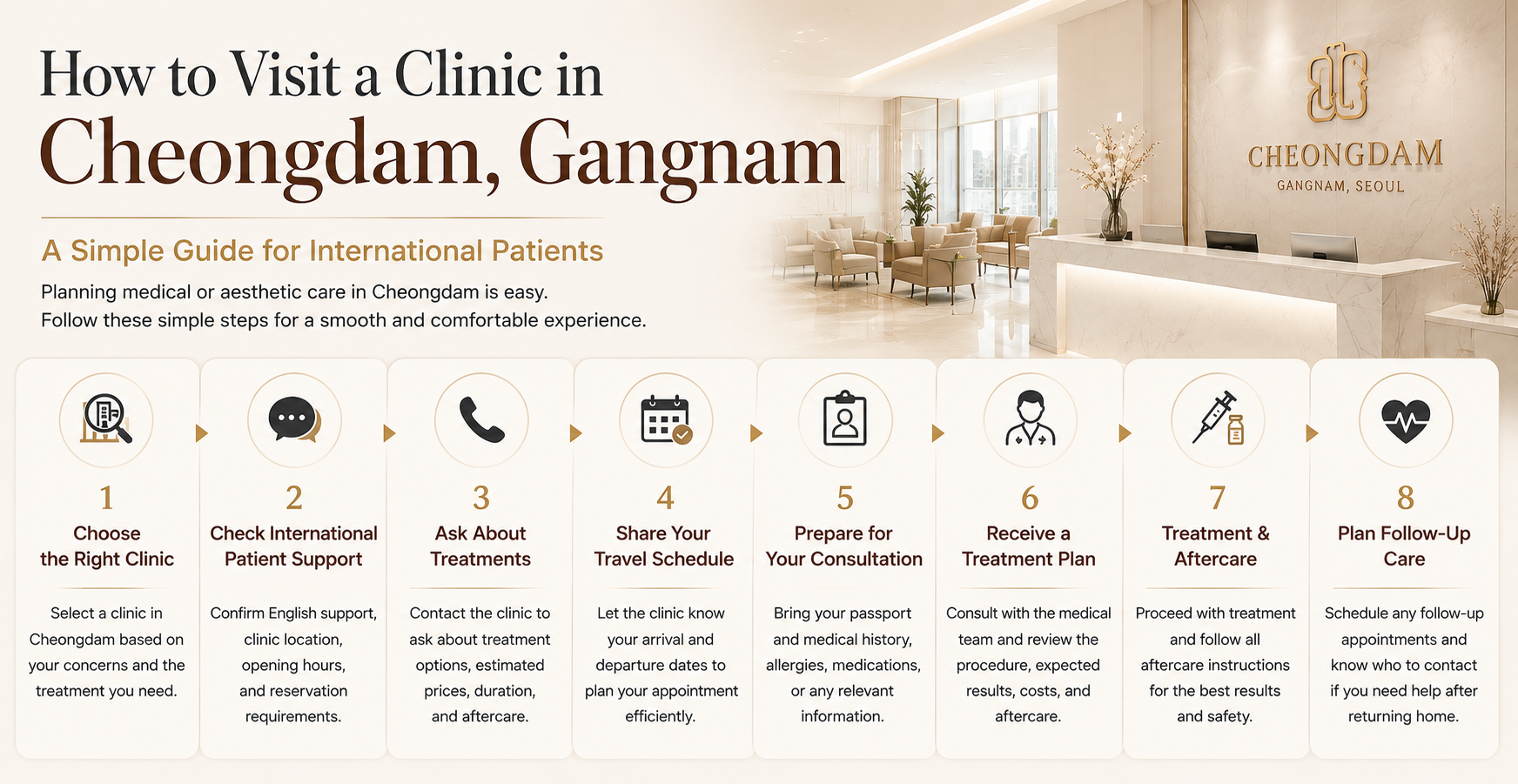
Seoul combines medical services with a large tourism infrastructure, which can make the city convenient for international visitors.
Patients may be able to combine a treatment appointment with accommodation, transportation, shopping, dining, and other activities. Cheongdam, Apgujeong, and surrounding areas are among the Seoul neighborhoods that international visitors may research when planning beauty-focused trips.
However, treatment should remain the priority when planning the itinerary.
Some procedures can cause redness, swelling, bruising, sensitivity, or other temporary effects. More invasive procedures can require substantially longer recovery. Activities involving heat, strenuous exercise, alcohol, or extensive outdoor exposure may also need to be restricted depending on the procedure and medical advice.
A beauty itinerary should therefore leave enough flexibility for recovery.
Is Skin Treatment in Korea Cheaper?
Cost is one factor that may influence international patients, but it should not be assumed that Korea is always cheaper than another country.
Prices can vary according to the clinic, practitioner, treatment area, device, product, dosage, treatment intensity, number of sessions, and additional services.
International patients also need to consider the complete cost of treatment abroad, including:
- Flights
- Accommodation
- Transportation
- Consultation
- Treatment
- Medication, when applicable
- Aftercare
- Additional appointments
- Potential extra nights if recovery takes longer than expected
A lower quoted treatment price does not necessarily mean a lower overall trip cost.
Technology and Treatment Variety
Korean aesthetic clinics may offer a range of modern devices and treatment technologies. Depending on the provider, patients may encounter established energy-based technologies alongside injectable and skin-focused procedures.
However, technology should not be the only factor used to select a treatment.
The newest device is not automatically the best choice for every patient. Treatment selection should consider the individual's skin condition, anatomy, medical history, goals, and tolerance for downtime.
A qualified professional should explain why a particular treatment is being recommended and what alternatives may exist.
Language and International Patient Support
Foreign patients should consider communication before booking treatment.
Some clinics serving international visitors may provide English-language assistance or other forms of language support, but this should be confirmed directly with the provider.
Clear communication matters because patients need to understand the treatment plan, preparation requirements, possible side effects, recovery instructions, and follow-up arrangements.
Before traveling, international patients should also provide accurate information about previous cosmetic procedures, medications, allergies, and relevant medical history when requested.
How to Choose a Skin Clinic in Korea
A successful medical-tourism experience depends heavily on choosing an appropriate provider.
Before booking, consider:
- Who will perform the treatment? Understand the practitioner's relevant qualifications and experience.
- What exactly is being recommended? Ask about the purpose of the treatment and realistic expectations.
- What are the risks? No cosmetic treatment is completely risk-free.
- What downtime is expected? Recovery requirements vary considerably.
- What is included in the price? Confirm consultation, treatment, aftercare, and additional-session policies.
- What happens after you return home? Understand how follow-up or complications will be handled.
- Is communication adequate? Make sure you can understand important medical information before consenting to treatment.
Do not choose a clinic solely because it appears frequently on social media or because a particular procedure is trending.
Should You Travel to Korea for Skin Treatment?
Traveling to Korea may make sense for people who specifically value the country's broad aesthetic treatment market and want to combine professional skin care with a Seoul visit.
It may be less practical for someone seeking a simple procedure that is readily available from a trusted provider close to home, particularly when follow-up is important.
The decision should ultimately be based on the specific treatment, provider, total cost, travel requirements, recovery period, and aftercare plan.
For international patients, the most important question is not simply why foreigners travel to Korea for skin treatments. It is whether the particular treatment and provider are appropriate for you.
Conclusion
Foreigners travel to South Korea for skin treatments for several reasons: a strong skincare culture, a broad range of aesthetic procedures, concentrated clinic options in Seoul, and the opportunity to combine treatment with medical tourism.
Cheongdam is one area that international patients may explore when researching dermatology and aesthetic medicine in Seoul, but location alone does not determine quality.
Before making a decision, research the specific procedure, provider qualifications, expected results, risks, downtime, total cost, and follow-up arrangements. A well-planned treatment should prioritize appropriate medical care and realistic expectations over trends or destination popularity.
FAQs
Why do foreigners travel to Korea for skin treatments?
Foreign visitors may be attracted by Korea's established aesthetic medicine market, wide range of skin treatments, specialized clinic districts, and the opportunity to combine treatment with a Seoul trip.
What skin treatments are popular with international patients in Korea?
Options can include laser treatments, pigmentation care, acne and acne-scar treatments, skin boosters, collagen-stimulating procedures, and non-surgical skin-tightening treatments. Availability varies by provider.
Is Korea cheaper for skin treatments?
Not necessarily. Treatment prices vary significantly, and international patients should consider flights, accommodation, transportation, consultation, treatment, and aftercare when calculating the total cost.
Is Cheongdam good for skin treatments?
Cheongdam is an area of Seoul that international patients may consider when researching dermatology and aesthetic services. However, individual provider quality and treatment suitability matter more than the neighborhood alone.
Do Korean skin treatments have downtime?
Some treatments have little downtime, while others can cause redness, swelling, bruising, sensitivity, or require several days of recovery. Downtime depends on the specific procedure.
Can foreigners get dermatology treatment in Korea?
International patients can seek eligible medical and aesthetic services in South Korea. Patients should confirm provider availability, communication arrangements, and applicable travel or visa requirements before making plans.
How should foreigners choose a Korean skin clinic?
Compare the practitioner's qualifications, experience, treatment recommendations, risks, expected downtime, pricing, language support, and follow-up arrangements rather than relying solely on online popularity.
How long should I stay in Seoul after a skin treatment?
There is no universal timeframe. Minor treatments may require little recovery, while more invasive procedures can require longer observation and follow-up. The treating professional should advise on appropriate timing for travel.