Eyelid Surgery in Cheongdam
Eyelid Surgery in Cheongdam
Eyelid surgery is one of the most established facial plastic surgery procedures, and it is widely discussed by patients considering cosmetic surgery in Seoul. In Cheongdam, clinics may offer procedures ranging from double-eyelid surgery to upper and lower blepharoplasty, ptosis correction, and other procedures designed around the eyelid and surrounding eye area.
For international patients, choosing eyelid surgery should involve more than comparing before-and-after photographs. Eyelid anatomy is highly individual, and factors such as eyelid crease, skin thickness, fat distribution, brow position, muscle function, asymmetry, and dry-eye symptoms can influence surgical planning.
Cheongdam can be a convenient location for researching these procedures, but the individual surgeon, technique, medical assessment, recovery plan, and postoperative care should remain the primary considerations.
What Is Eyelid Surgery?
Eyelid surgery, medically known as blepharoplasty, is performed to alter or rejuvenate the eyelids. Depending on the procedure, surgery may address excess skin, selected fat compartments, eyelid position, or other structural features.
Eyelid surgery can be cosmetic, functional, or a combination of both.
Upper eyelid surgery may address excess upper-eyelid skin or changes associated with aging. In selected patients, correction of drooping eyelids may also improve aspects of the visual field. Research on upper blepharoplasty has reported potential functional benefits, although outcomes vary by patient and procedure.
Common Types of Eyelid Surgery in Cheongdam
Double-Eyelid Surgery
Double-eyelid surgery creates or modifies an upper-eyelid crease. Different surgical approaches may be considered depending on eyelid anatomy, skin characteristics, existing crease, and the desired appearance.
The goal is not simply to create a crease at a particular height. The surgeon should consider the relationship between the eyelid, brow, eye shape, and surrounding facial structures.
Upper Blepharoplasty
Upper blepharoplasty generally focuses on excess skin and other age-related changes affecting the upper eyelid.
It is commonly considered when the upper eyelids appear heavy or hooded. In some cases, excessive upper-eyelid tissue may also contribute to visual-field limitations.
A systematic review found generally favorable aesthetic outcomes following upper blepharoplasty, although surgical design and technique continue to vary according to the individual patient.
Lower Blepharoplasty
Lower blepharoplasty is used to address selected changes in the lower eyelid, which can include excess skin, fat prominence, hollows, or age-related changes around the lower eye.
Lower-eyelid anatomy is complex, and recent anatomical research emphasizes the importance of understanding the supporting structures when planning surgery.
The procedure may therefore involve different techniques depending on whether the primary concern is excess skin, fat, hollowing, or a combination of factors.
Ptosis Correction
Ptosis refers to drooping of the upper eyelid. It can have different causes and may affect both appearance and, in some cases, vision.
Ptosis correction is different from simply removing excess eyelid skin. A patient with eyelid drooping may require assessment of eyelid muscle function and other anatomical factors before the appropriate surgical approach is selected.
This distinction is important because treating the wrong structural problem may not produce the intended result.
Who May Consider Eyelid Surgery?
Eyelid surgery may be considered by adults who want to address concerns such as:
- An upper-eyelid crease they would like to modify
- Excess upper-eyelid skin
- Heavy or hooded-looking eyelids
- Age-related changes around the eyes
- Lower-eyelid bags
- Selected lower-eyelid skin changes
- Eyelid asymmetry
- Certain forms of eyelid drooping
Suitability depends on individual anatomy and health rather than age alone.
People with significant dry-eye symptoms, previous eye surgery, eyelid disorders, vision concerns, or other relevant conditions should discuss these issues during consultation. Research indicates that eyelid surgery can affect ocular surface characteristics and may worsen dry-eye symptoms in some patients.
How Is Eyelid Surgery Planned?
A detailed examination is important because several structures contribute to the appearance of the eye.
A surgeon may assess:
- Eyelid skin
- Eyelid crease
- Fat distribution
- Eyelid muscle function
- Brow position
- Existing asymmetry
- Eye closure
- Lower-eyelid support
- Dry-eye symptoms
- Previous eyelid procedures
Pre-existing asymmetry is particularly important. Even when both eyes appear similar, subtle differences in anatomy can influence postoperative symmetry.
The surgical plan should therefore be individualized rather than based on a standard crease height or a reference photograph.
Benefits and Limitations
The potential benefits depend on the specific procedure.
Cosmetic eyelid surgery may improve the appearance of excess skin, eyelid heaviness, bags, or an unwanted crease. Functional surgery can sometimes improve visual-field limitations associated with eyelid position.
However, eyelid surgery does not necessarily address every concern around the eyes. Dark circles, pigmentation, fine surface lines, tear-trough hollows, and brow position may require different treatments.
Surgery also cannot guarantee perfectly symmetrical eyes. Existing asymmetry can remain after surgery, and healing may differ between the two sides.
Risks and Possible Side Effects
Like other surgical procedures, eyelid surgery carries risks.
Possible complications include:
- Swelling and bruising
- Dry or irritated eyes
- Bleeding
- Infection
- Changes in sensation
- Difficulty fully closing the eyes
- Eyelid-position changes
- Unfavorable scarring
- Asymmetry
- Need for revision surgery
- Temporary or, rarely, permanent vision changes
The American Society of Plastic Surgeons specifically lists dry eyes, difficulty closing the eyes, ectropion, infection, scarring, swelling, bruising, and possible vision changes among potential risks.
Lower-eyelid surgery can involve particular anatomical considerations, so patients should discuss procedure-specific risks rather than relying on general information about blepharoplasty.
Recovery After Eyelid Surgery
Recovery varies according to the procedure and individual healing.
Early recovery may involve swelling, bruising, irritation, dryness, and discomfort. Cold compresses, lubricating products, wound care, and other postoperative measures may be recommended by the surgical team.
Patients should ask when they can:
- Return to work
- Wear makeup
- Resume exercise
- Use contact lenses
- Return for stitch or wound checks
- Travel by air
- Resume their normal skincare routine
Visible swelling and bruising can make it impractical to schedule surgery immediately before important meetings, photography, or sightseeing.
Eyelid Surgery for Foreigners in Cheongdam
International patients have additional logistical considerations.
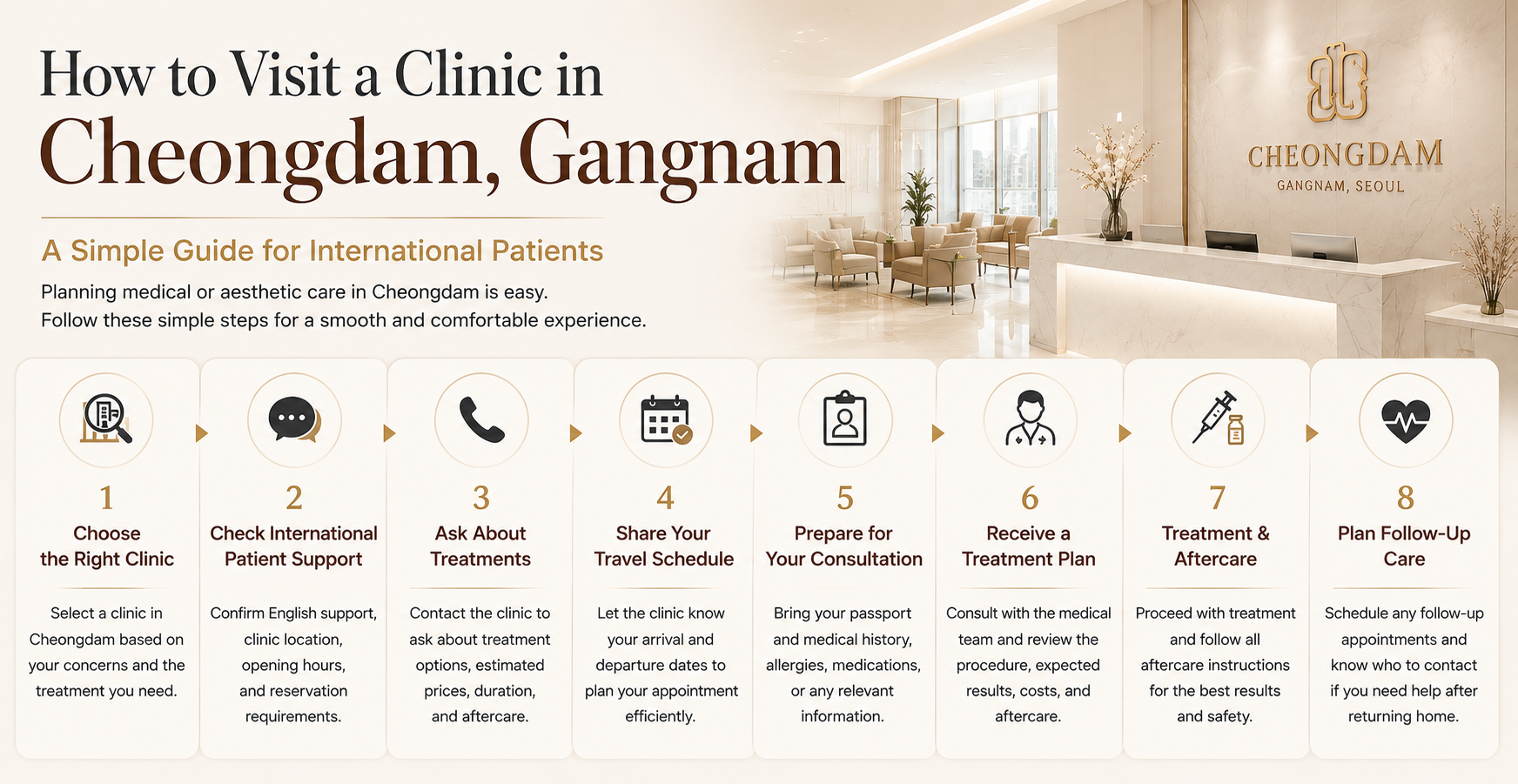
Some Cheongdam plastic surgery clinics provide services designed for foreign patients, such as English or multilingual communication, interpretation, consultation coordination, and assistance with appointments.
However, services vary between clinics. Before booking, confirm whether language support is available during the actual surgeon consultation and whether postoperative communication will remain available after you return home.
International patients should also provide information about:
- Previous eye surgery
- Previous cosmetic procedures
- Medications
- Allergies
- Contact-lens use
- Dry-eye symptoms
- Relevant medical conditions
Do not assume that an online consultation can replace an in-person examination.
How Much Does Eyelid Surgery Cost in Cheongdam?
There is no universal price for eyelid surgery in Cheongdam.
Cost can depend on:
- Procedure type
- Surgical technique
- Surgeon
- Complexity
- Anesthesia
- Facility fees
- Whether multiple procedures are combined
- Postoperative care
- Revision requirements
Double-eyelid surgery, upper blepharoplasty, lower blepharoplasty, and ptosis correction may have very different pricing structures.
International patients should also consider accommodation, transportation, flights, medications, and additional days in Seoul if recovery takes longer than expected.
Request an itemized quotation and confirm exactly what is included before making a booking.
Choosing an Eyelid Surgery Clinic in Cheongdam
When comparing clinics, look beyond promotional photographs.
Check the Surgeon
Find out who will perform the operation and how frequently they perform the specific eyelid procedure you are considering.
Procedure-specific experience matters because upper eyelid surgery, lower blepharoplasty, double-eyelid surgery, and ptosis correction involve different anatomical considerations.
Ask About the Technique
Ask why a particular technique is being recommended for your eyelid anatomy.
If you are shown several options, ask about the differences in incision, expected recovery, limitations, and potential risks.
Discuss Eye Health
Tell the surgeon about dry eyes, previous eye surgery, contact-lens use, vision problems, or other relevant concerns.
This information can affect surgical planning and postoperative care.
Understand Follow-Up
Ask how many postoperative visits are expected and whether the clinic provides support if a problem develops after you return home.
For international patients, follow-up planning should be established before surgery rather than treated as an afterthought.
Questions to Ask During a Consultation
Before choosing eyelid surgery in Cheongdam, consider asking:
- Which eyelid procedure is appropriate for me?
- What anatomical concern are we treating?
- Will the procedure affect my eyelid crease?
- Do I have signs of ptosis?
- How will existing asymmetry be addressed?
- Could the procedure affect dry-eye symptoms?
- What type of anesthesia will be used?
- What are the main risks?
- How much swelling and bruising should I expect?
- How long should I stay in Seoul?
- When can I fly home?
- What is included in the total cost?
- How will postoperative follow-up be handled?
These questions can help you compare clinics based on medical suitability rather than marketing claims.
Conclusion
Eyelid surgery in Cheongdam includes several procedures, from double-eyelid surgery and upper blepharoplasty to lower blepharoplasty and ptosis correction.
Because the eyelids are closely connected to both facial appearance and eye function, treatment planning requires careful assessment of anatomy, symmetry, eyelid movement, skin, and ocular health. Research also highlights the importance of considering possible effects on the ocular surface and dry-eye symptoms.
For international patients, the decision should also include language support, recovery time, postoperative monitoring, travel planning, and total cost.
Cheongdam can be a useful location for researching eyelid surgery in Seoul, but the neighborhood itself should not determine the choice. The most important comparison is between the individual surgeon, technique, facility, and follow-up plan.
FAQs About Eyelid Surgery in Cheongdam
What is eyelid surgery called?
Eyelid surgery is commonly called blepharoplasty. Depending on the concern, other procedures such as double-eyelid surgery or ptosis correction may also be considered.
What is the difference between double-eyelid surgery and blepharoplasty?
Double-eyelid surgery primarily creates or modifies an upper-eyelid crease. Blepharoplasty generally addresses excess skin and other age-related structural changes. The procedures can have different goals and techniques.
Is eyelid surgery in Cheongdam suitable for foreigners?
Some Cheongdam clinics provide international-patient services and multilingual support. Patients should confirm the specific clinic's language, consultation, and follow-up arrangements before booking.
Can eyelid surgery improve droopy eyelids?
It can, depending on the cause. True ptosis may require a different surgical approach from removing excess eyelid skin, so proper assessment is important.
Can eyelid surgery affect dry eyes?
It can. Research has reported changes in ocular surface characteristics and possible worsening of dry-eye symptoms following some upper-eyelid procedures. Patients with existing dry-eye symptoms should discuss them before surgery.
How long does recovery from eyelid surgery take?
Recovery varies by procedure and individual healing. Swelling, bruising, irritation, and dryness can occur during early recovery. Your surgeon should provide a procedure-specific timeline.
Is lower blepharoplasty different from upper blepharoplasty?
Yes. Upper and lower eyelid surgery address different anatomical structures and concerns. Lower-eyelid surgery can involve fat, skin, and supporting tissues and requires individualized planning.
How much does eyelid surgery cost in Cheongdam?
Prices vary according to the procedure, surgeon, technique, anesthesia, facility, and follow-up. Request a current itemized quotation directly from the clinic.
How long should foreigners stay in Seoul after eyelid surgery?
There is no universal timeframe. The appropriate stay depends on the procedure, healing, and postoperative appointments. Discuss the timing of your return flight with your surgeon before booking.
How should I choose an eyelid surgeon in Cheongdam?
Compare procedure-specific experience, consultation quality, surgical technique, understanding of eyelid anatomy, eye-health assessment, anesthesia arrangements, and postoperative care rather than choosing based solely on location or online photographs.